Haunted Heartland
Haunted Heartland
10/20/2026 | 29m 31sVideo has Closed Captions
Brian "Fox" Ellis explores the history behind Central Illinois legends and ghost stories.
Gather around the campfire with Storyteller Brian "Fox" Ellis for four Central Illinois legends. From Illinois Wesleyan’s Lady in Red and Peoria State Hospital’s Old Bookbinder to Springdale Cemetery’s Witches Circle and the Cole Hollow Monster, Haunted Heartland explores the history behind the mystery and the real people whose lives inspired stories that still spark our imaginations.
Problems playing video? | Closed Captioning Feedback
Problems playing video? | Closed Captioning Feedback
Haunted Heartland is a local public television program presented by WTVP
Haunted Heartland
Haunted Heartland
10/20/2026 | 29m 31sVideo has Closed Captions
Gather around the campfire with Storyteller Brian "Fox" Ellis for four Central Illinois legends. From Illinois Wesleyan’s Lady in Red and Peoria State Hospital’s Old Bookbinder to Springdale Cemetery’s Witches Circle and the Cole Hollow Monster, Haunted Heartland explores the history behind the mystery and the real people whose lives inspired stories that still spark our imaginations.
Problems playing video? | Closed Captioning Feedback
Where to Watch Haunted Heartland
Haunted Heartland is available to stream on pbs.org and the PBS app.
Providing Support for PBS.org
Learn Moreabout PBS online sponsorship(bright instrumental music) (crickets chirping) (campfire crackling) (soft airy whistling) - Don't you just love a night like tonight?
The air is cool.
The evening is quiet.
(owl hooting) (wings fluttering) Well, maybe not that quiet.
This is a perfect night for sitting around a campfire with friends old and new and telling scary stories.
Don't you think?
One, two, three.
That won't do.
Four.
I have four haunting tales to tell you from right here in this neck of the woods.
I believe the best scariest campfire stories are the ones that happened in your backyard.
They're the ones that stay with you.
They're the ones that haunt you.
So settle in, warm yourself by the fire as we enjoy these four legends from right here in the "Haunted Heartland".
(insects chirping) (campfire crackling) (insects trilling) Good stories get passed down over the years.
They become a part of the oral tradition.
Let's take a look at Illinois Wesleyan University.
It's one of the oldest colleges in the state.
Over time students have come and gone, but the story's been passed down and become part of the lore of the campus.
(locks clicking) (keys jangling) - [Interviewee] University archives tracks our history dating back to the founding of the university in 1850.
Looking back, you can constantly see the student newspapers will publish stories about ghosts on campus.
- It says here, "You feel something follow you up the stairs, "and you can see something from the corner of your eye "reflected in the glass, "but if you turn around and face it, "you won't see anything."
- So Illinois Wesleyan University is a small liberal arts college, and we have just celebrated our 175th anniversary.
For our students, I think understanding the history of the university, and some of that is some of the storytelling, helps them gain a sense of self and a sense of belonging to the campus, and they can see themselves in the past as well.
(somber instrumental music) - The Lady in Red, so Mary Louise Hodge DeMange was her full name.
The story goes she had married A.E.
DeMange, and they built this kind of revitalist classicist mansion that's right on the outer edge of campus today.
And the two moved in to the mansion, and she ends up dying a little over a year later.
Broken by her death, her husband left the house and eventually sells it in 1911 to Illinois Wesleyan with all of the furniture.
He didn't take a thing according to the story.
And I think that has a lot to do with kind of that haunting element.
(somber instrumental music) - There are several different written down accounts that are published in the student newspapers, and they vary a little bit, but they have some common threads.
But one idea is that Mrs.
DeMange can be seen in a ball gown, because she's getting ready to attend a fancy ball.
She's likely red, so they call her the Lady in Red.
- She isn't trying to harm anyone from the stories we read, but she is lingering there.
She's one of the most popular on campus today.
A lot of the students have mentioned experiencing something in Kemp Hall.
- The radio station for Illinois Wesleyan, WESN, is housed in the basement in Kemp Hall.
My freshman year I'm there, and I'm doing my homework.
My friend is in the corner doing their homework.
And you can hear when the music is playing.
You can hear it coming through the speakers, and all of a sudden you just get straight static.
Like, it's like a hard cut.
And I thought that I had hit one of the knobs on the board, but slowly, like, the static starts backing away and all of a sudden the music's playing.
(serene operatic music) The Wednesday right after, I mentioned that this happened and one of them turns to me and goes, "Oh, yeah, "that was probably one of the ghosts."
She was like, "Yeah, there's a binder.
"If you go through it, "there should be a laminated page there."
Apparently, there's a certain methodology or whatever to sort of satisfy her, I guess, because apparently people will claim that that's her.
That's her interrupting the radio.
I mean, I guess, like, yeah, I'd be kind of upset if there were these random people blasting tunes in my basement, like, you know.
- I think what's interesting when we talk about ghost stories and folklore in general is just like this, it's been a tradition in human history throughout like going back to ancient times that there's myths and legends shared.
And this is just modern day versions of those legends, and it's an interesting example of oral tradition at work and oral storytelling at work, so yeah.
(gentle guitar music) - I think that it's fun, you know, in a way you know, to feel that you're part of history.
Sometimes you're like, "Okay, was that actually like a ghost "or was that a prank that just, like, "has now become an urban legend?"
Do you know what I mean?
And I think that that's like part of the fun in it because like I could honestly believe that there are ghosts here.
I could also honestly believe that every single story is a prank or an urban legend because you have that sort of student body, you know what I mean?
So I think that's cool.
I think it's fun.
(gentle instrumental music) - Everybody loves a good story.
And here at Wesleyan, I find our students getting more and more creative with how they tell stories, right?
So I think, you know, the ghosts definitely lend themselves well, not only to our institutional history, but how students see the world around them and think about the campus around them and their connection to it.
It's pretty cool to be able to tell the history of the dorm that you're living in.
Having that idea of something else lingering, if the walls could tell stories, well, what stories would they tell?
And the ghosts help the students tell those stories.
- The interesting thing about the university is we always have new students every four years and a new group comes in.
So with that overlap, the upperclassmen have an opportunity to tell the lowerclassmen these stories and it kind of lives on.
- People like it because of the fact that it's a very quick way to bond, not just with other people, but bond with the campus.
(gentle guitar music fades) (crickets chirping) - The Lady in Red may be forever tied to Kemp Hall, one tragedy forever linked to the house where it took place.
So what happens when a place is linked with hundreds of tragedies?
Right down the road on top of the hill are the remains of the Peoria State Hospital, originally called the Illinois Asylum for the Incurable.
Incurable Insane, with a name like that, many haunting tales have become part of the legend.
(mysterious instrumental music) - I started coming to the grounds when I was about seven years old.
I found out I had a family member that was buried here on the hilltop.
And the first thing my grandfather told me was this hilltop was for special people.
I thought he meant giants.
(eerie instrumental music) The Peoria State Hospital was an institution put here in Bartonville in 1902.
All of Illinois, the train system would deliver patients here on the hilltop.
Most of our early days, you had to be diagnosed as forever incurable at another institution before you would arrive here.
- On a beautiful June day in 1905, a gentleman came to us on the train system.
His malady, as suggested by his paperwork from the Chicagoland area, caused him to be completely mute.
- When he came off the train, they knew right away that he was a little bit different due to the fact that he couldn't answer any questions.
The head nurse decided just by looking over his paperwork that she would name him Manuel A. Bookbinder.
That's what he does, so that is who he became as a man.
- So Bookbinder being a physically fit individual, he was given a job on the burial court or the grave digging detail.
Being part of the funeral rites was one of the most important jobs at Peoria State Hospital because it was the last opportunity for patients to lay their fellow ones to rest.
While Bookbinder himself was mute, one thing that man could do was show emotion.
He was known for every funeral that he attended.
Every funeral he knew was happening at Peoria State Hospital, he would wail, and he would weep, and he would cry uncontrollably, very particularly at a elm tree that was very close to the center of the lot.
He only was here five short years.
But at that point, it kind of got to be a bit of an urban legend around the institution that if Bookbinder didn't cry at your funeral, you wouldn't cross onto Heaven.
Bookbinder himself ends up passing away.
He dies from tuberculosis here at Peoria State Hospital.
So the field behind Cemetery Two filled with hundreds of individuals ready to send Bookbinder off to his last place as he had sent so many others.
And the coffin was placed above the grave.
Your four strongest members of your burial core lower it down into the grave.
Well, as they do this for Bookbinder, these four men put tension on ropes expecting resistance and suddenly the coffin is lighter than air.
These four men fall on their backs and scramble away from the coffin because it was unnatural.
It was way lighter than it should have been.
They suddenly hear a very familiar wailing coming from a nearby elm tree.
Some people scream, some people run, a few people turn their heads, and at Bookbinder's tree is the visage of that man crying at his own funeral harder than he'd ever cried before.
(eerie instrumental music) - The nurses would tell stories of hearing him cry.
The patients would talk about how on rainy nights you could still hear Old Bookbinder cry.
He became popular in the community to a point where every Halloween they still tell the story of Old Bookbinder.
- So with Bookbinder, he was a patient of ours.
He was a grave digger.
He passed away from tuberculosis, and he was laid to rest in Cemetery Two of the Peoria State Hospital.
All of the ghost story of him crying at his own funeral and whatnot was an absolute fabrication by Dr.
Zeller.
(dramatic instrumental music) While he may have been a superintendent and a man of science, he was also a romantic and a storyteller.
He would take stories of some of our patients that he believed deserved to be told, embellish a few things, and then publish them out.
- Mostly in the 1900s, things began to change.
It was before that people were just locked in basements and basically kept away from the public.
At that point in time, their best ideas for someone who's having a manic fit was to tie down, regulate, chain down, use a bed saddle that kind of thing.
Under the leadership of Dr.
George Zeller, him and his wife Sophie decided that they wanted something new.
They wanted to treat people that had mental illness like their own family.
This institution gave them something that no one else gave them, and that's a home life.
When you have a movie on Friday, and a dance on Saturday, church service on Sunday, and a baseball game afterwards, you have a village more than you have an institution.
(light instrumental music) These restraints were actually shown in Dr.
Zeller's office.
He wanted to make sure he trained everyone.
He did not want straight jackets, straight gowns, or straight pajamas.
A strap cannot forgive, a strap cannot let go, but a human hand, a human hand lets go and then comforts a patient.
He regularly was evaluated by local journalists who would come in and ask him questions about why his institution was non-restraint.
He said the same thing over and over again, "A smile turneth away wrath."
- Usually people will latch onto the ghost story and let it run wild because they believe that a good story is better than the truth that's out there.
- Those old ghost stories is what people remember.
It's unfortunate because this was an amazing institution.
- Most people just don't know the true history of Peoria State Hospital.
They latch on to the word "asylum" and assume horror stories.
Bookbinder was a wonderful representation of what all of the individuals out in this cemetery are.
These were loved ones.
These were family members.
These were people with their own loves, cares, and desires.
- Bookbinder is an amazing story, and there's so much to who he was, and we're proud we can still talk about Old Book because the whispers, the cries, who he was as a man and who this was as an institution, that's still here for people to come and visit.
- [Interviewee] There are still paranormal stories at Peoria State Hospital.
They're all just not horror.
- So when people talk to us about ghost stories, and they regularly ask, "Are we a haunted location?"
Do we hear voices?
Absolutely.
Do the doors open and close on their own?
On the regular.
Most definitely we are haunted, but what we're haunted by is the passion of people that actually felt loved here on the hilltop.
And for whatever reason they remain, we're glad they're here.
(gentle music fading) (insects trilling) - The folks at Peoria Hospital were real people with rich, full lives, not villains, not ghosts.
If we don't ask questions and investigate the stories we're told, how will we discover the truth?
(dramatic instrumental music) - In the already sprawling landscape of Springdale Cemetery, there lies a place on the outskirts.
The only way to get to it is on foot.
It's so far back and surrounded by this prairie land, that from anywhere else in the cemetery, you wouldn't know it's there.
The locals call it the "Witches Circle".
The circle is for one family, the Cole family, probably a name very familiar in the Peoria area.
The locals have said that they've seen seances, practices of witchcraft, shadows that move, cold spots, and there's always this eerie sense that you're being watched.
To this day, people say that they see the wax of candles from rituals located on headstones, and at the center we have what the locals call the "Devil's Tree", a sassafras with trident leaves growing directly out of the body of Almiran Cole.
With a landscape unlike any other portion of the cemetery, this prairie grass is said to be thousands and thousands of years old and gives the perfect cover for the Witches Circle, a place that's rumored to be a meeting spot for hooded figures, for seances and rituals, a spot not unlike a place like Stonehenge, a point of power on the ley lines.
Inside of it, you can feel sort of a presence that is otherworldly.
Weeding through rumor and folklore and factual accounts, you can believe what you want, decide for yourself.
However, being out here, you can definitely feel a certain presence, be it a lovely atmosphere, a thinning between the worlds, or maybe that truly esoteric sense of power that some people claim this place has.
(birds chirping) - So we have a lot of different types of records.
This is a Lot book.
And inside we have, it's essentially like kind of a pictogram map of the different sections of the cemetery.
(gentle guitar music) So I have the Cole family.
They are in Lot 720, and you can see the 60-foot circle.
(mellow instrumental music) Springdale Cemetery was founded in 1854, and like many cemeteries of that era, this was a place that was not just a cemetery, it was used as a public park.
It was originally about two miles outside of downtown Peoria, and people would come here on a Sunday for a stroll, for a picnic.
It is a place to learn about Peoria history, about the people who formed this city and made it great.
It's a place to learn about nature, the rare ecological Springdale, Savannah.
Obviously, the Cole Circle or the Witches Circle, whatever you call it, has captured a lot of people's imaginations.
People come here specifically to visit this site, and they're known to leave small tokens like little stones.
I've seen people leave notes, and that's certainly okay.
We definitely advocate for people being respectful and, you know, keeping into consideration that this is someone's final resting place, so we want to treat it with respect and dignity.
At the top of this monument, we have an upside down torch, which symbolizes a life extinguished.
We're standing here at the grave of Captain Almiran S. Cole, who is certainly one of the most prominent of Peoria's early settlers.
In 1844, he's credited with opening Peoria's first distillery.
He ended up building a four-story distillery downtown that was, at the time, one of the largest buildings in the Mississippi Valley.
Many people don't know that this grave here for his infant children was actually moved here in the late 1800s when he purchased this plot.
They were originally laid to rest in the Masonic Cemetery downtown.
Captain Cole is here with his wife.
You'll notice his headstone and his footstone, and it's hard to miss this very impressive sassafras tree, which I've talked to a number of arborists who claim that this is one of the largest sassafras trees they have ever seen.
And I think the circular fashion of this grave, the size of this tree and the placement of it, the location of the family grave in the middle of the savanna all have led to decades of people coming up with stories about hauntings and supernatural events happening here.
(birds chirping) (gentle guitar music) So as we share these urban legends and myths, it's important to keep in mind that these were real people with real stories, and it is part of our duty to pay reverence to their memories by doing the research when we're able to look at what facts are known.
That's where you go to the library.
That's where you look online and see what facts you can find out.
You know, as we share these myths and urban legends, we have to also remember that these were real living people, and it is our duty to preserve their memory.
(gentle guitar music continues) - Captain Cole was a true pioneer in Peoria.
He was one of the original whiskey barons, but his legacy has been overshadowed by fear and misunderstanding.
Rumors have distorted the story.
Did you know there's actually a road named for him in East Peoria, Cole Hollow Road?
But if you ask the locals, they don't know who Captain Cole was.
They will say the Cole Hollow Monster.
(eerie instrumental music) (energetic rock music) - It was on a Saturday morning.
I was, I think, 12 years old at the time.
One of my buddies came over, and said, "Hop on your bike.
"Somebody said they saw Bigfoot."
There were still phones back then, you know, and people were calling people, calling people, calling people.
And next thing you know, everybody and their brother that was a conspiracy theorist was out here looking for Bigfoot.
There was five of us that rode our bikes down here, and the cars were lined up.
Hundreds of cars, hundreds of people, everybody on this road at that time had no business being here, and everybody that was parked along the road was part of the zoo, and it was a zoo that day.
And we didn't believe it at all.
We were laughing about grown adults walking through the woods, bringing their hunting dogs, trying to find... I don't think it was ever named Cole Street Monster, but everybody thought it was Bigfoot.
Sometime around lunchtime, I believe, an elderly gentleman was up in these woods.
He took the gun, and he was up actively, actively hunting Bigfoot.
We weren't really close at that point, but we were close enough to hear the gunshot.
And we ran over where all the hubbub was going, and we were here when they opened the back of the ambulance and threw him in and took him off to the hospital.
He survived.
(bright percussion music) (bright energetic rock music) Accidentally having a gun discharge and hurting himself escalated the problem that we had with all the people in the woods, and the police were here.
And at that point, that's when the cops started sending people home.
Back then, we didn't have cellphones.
We didn't have video games, nothing, and getting outside and doing something weird like that wasn't so uncommon.
And we knew in our hearts of hearts that nobody was going to find anything.
We were hoping that it may be true, but we knew it wasn't.
The young man that started it all recanted it later, which takes the people that believe that this happened is the people that just want to believe it.
- When you have a really good story, and if you're a very good storyteller, you can convince people of things that never happened.
So in the early '70s, a young man had claimed that he had seen essentially a Bigfoot type creature, and to have one locally, you are going to have people who are interested.
You are going to have people who run to go look.
That's why it persists.
That's why haunted stories exist.
That's why haunted cemeteries exist, because people, they want to be able to say, "Oh, I had that happen too."
It really is a fear of missing out, that you weren't part of this legend that you grew up around.
And even when it's retracted, you're going to have people now who will hear a very natural thing happening, like a tree branch that cracks and think, "Oh, no, the Cole Hollow Monster is nearby, "and I got to get going."
While it was refuted, there is always going to be a person that says, "Well, you know, after I heard that, "I think I heard this."
And whether it's false memories or kids playing around, there's always going to be somebody who will believe.
(bright rock music continues) - This story's been going on for 55 or 57 years.
I'm impressed.
I just wish that people's energy would be more toward what's really happened in this area.
Cole Street is spelled not C-O-A-L, it's spelled C-O-L-E, because this street was named after Captain Cole.
- If you look at everything that Almiran Cole did, the achievements he had, when you have a documented truth, it is documented that Almiran Cole came to Peoria in 1835.
It is documented that he started the first distillery.
What is not documented is the Cole Hollow Monster.
I think that Almiran Cole would have wanted people to remember his name.
I think he would have wanted people to know what he did for Peoria.
- It's a cool story.
It's a harmless story.
It uses people's imaginations, what could be and couldn't be.
- You can start with a story about a farmer, and by the time it goes through the game of telephone, it gets to 10 people later, and you have "A knight who slew a fire-breathing dragon!"
There is a certain chemical reaction that happens in your brain when you tell a really good story and people react, and you want to make it better every time.
A good story will last centuries.
A great story will last forever.
(bright rock music fades) (crickets chirping) - Everywhere we look, the places we visit are haunted by the memories of those who came before.
We all love a good story, but when you hear a tall tale, keep this in mind: if you ask the right questions and investigate, You can find the truth behind the myth.
I hope that you enjoyed tonights stories.
I hope you kept warm here by the fire.
I hope that I sparked your imagination, And I hope to see you again soon, here in this "Haunted Heartland".
(insects trilling) - [Speaker] We get to the black.
Okay.
(heavy breathing) That was good.
 New
The Cole Hollow Monster: A Legend That Lives On
Video has Closed Captions
A Bigfoot scare sparked a crowded search and an enduring legend: the Cole Hollow Monster. (5m 39s)
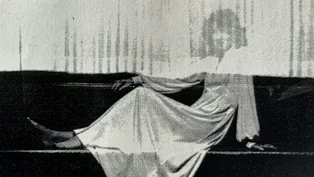 New
The Lady in Red at Illinois Wesleyan
Video has Closed Captions
Explore Illinois Wesleyan’s Lady in Red legend and the history behind the haunting. (5m 43s)
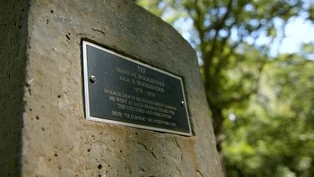 New
Old Bookbinder and the Truth Behind the Legend
Video has Closed Captions
Discover Old Bookbinder’s legend and the compassionate history of Peoria State Hospital. (6m 23s)
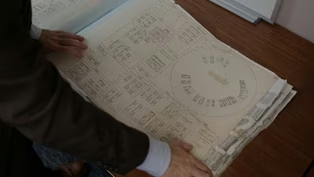 New
The Witches Circle at Springdale Cemetery
Video has Closed Captions
Uncover the Cole family history behind Springdale Cemetery’s mysterious Witches Circle. (5m 55s)
Haunted Heartland Streaming Premiere TONIGHT
Storyteller Brian “Fox” Ellis explores Central Illinois history, hauntings and local legends. (2m)
Providing Support for PBS.org
Learn Moreabout PBS online sponsorship










Support for PBS provided by:
Haunted Heartland is a local public television program presented by WTVP