Consider This with Christine Zak Edmonds
Dick Oakford: Preserving Stories, Sharing Faith
Season 7 Episode 9 | 24m 55sVideo has Closed Captions
Dick Oakford explores a family’s journey west and the connections built through prayer.
Author Dick Oakford discusses a family diary chronicling Aunt Jennie’s 1859 journey from Metamora to California. He shares how he adapted her words into a book, then reflects on faith, forgiveness and the friendships behind his book “Let’s Trade Prayers.”
Problems playing video? | Closed Captioning Feedback
Problems playing video? | Closed Captioning Feedback
Consider This with Christine Zak Edmonds is a local public television program presented by WTVP
Consider This with Christine Zak Edmonds
Dick Oakford: Preserving Stories, Sharing Faith
Season 7 Episode 9 | 24m 55sVideo has Closed Captions
Author Dick Oakford discusses a family diary chronicling Aunt Jennie’s 1859 journey from Metamora to California. He shares how he adapted her words into a book, then reflects on faith, forgiveness and the friendships behind his book “Let’s Trade Prayers.”
Problems playing video? | Closed Captioning Feedback
Where to Watch Consider This with Christine Zak Edmonds
Consider This with Christine Zak Edmonds is available to stream on pbs.org and the PBS app.
Providing Support for PBS.org
Learn Moreabout PBS online sponsorship(intriguing bright orchestral music) (intriguing bright orchestral music continues) (bright orchestral music) - Will you consider this?
You've got these ideas in your head, and then you put 'em down on paper, which this young man has been doing, Dick Oakford is his name.
He's a local author, just a family history in this area, but recently, you and your lovely wife, Carmen, found a diary from her aunt about a trip across country wagon train.
So, tell me, how did you come about this?
How did you find it?
- Well, the cousins had it, and they placed the original diary in the University of Illinois, in the Historical section.
So it really is a national document there.
And I found that they had a cousin that typed the journal, and I took that, and some of the pages were missing and I had to research to find those missing pages and some of the language that was out of there, and then I fictionalized some of the areas that the pages were missing.
But in all, I wrote that and used the same language, the same phraseology and the grammar and the misspellings of the journal of Aunt Jennie- - Yeah.
- Who was a great-great-aunt of my wife, Carmen.
- And this was in 1850... - 1859.
- Okay.
- They left Metamora a year after they were married; this must have been their honeymoon, five months of honeymoon, she was 24 years old.
So this... - They left Metamora- - They left Metamora.
- In the wagon with the horse.
- Well, not in the wagon- - Okay.
- Because they did go down to Saint Louis and got on the Missouri River- - Okay.
- And they outfitted out of there in their wagons and took off from there.
But it was five months and a wonderful journey.
She's beautiful, she just can use her language very well, it just was interesting the phraseology that she used, like, "We lay over here," or "We learn" that it's curious enough.
- Okay, exactly.
(Dick chuckles) And she was writing letters to her sister.
- Her little sister, Molly.
- Okay.
- So I included some of those letters in there 'cause it told us about Aunt Jennie.
Really, she had a lot of courage and a lot of determination.
- I guess.
Well, and the women wore all those heavy clothes, and- - That's what is amazing.
- So where did they bathe?
Where did they wash their clothes?
- Once a month- - Yeah, right.
- Whether they needed it or not.
(both chuckling) But that's the amazing part to me.
She did all of this wearing a petticoat.
- Yeah.
(Dick chuckles) - And in the wind, she mentions, in the wind, it was hard to walk, 'cause it would blow up.
- I guess.
Yeah, 'cause they did a lot of the walking.
So here's one from- - Yeah.
- So July 6th, 1859, "We have had a long hard drive today."
- Yeah.
- And we know from watching old movies and stuff that that's what they called it, it was a drive.
- [Dick] Yes.
- So they met some interesting characters along the way, what we now call Native Americans, but they had run-ins with Indians back then.
- Yeah, yeah.
- So explain what her description was of those kind of encounters.
- (chuckles) They liked to trade.
They were friendly, they didn't run across any Indians that were upset with them, but they did have occurrence or a time where they traveled through the country where the Indians did attack the wagons, but they were lucky and got through okay.
But they did have some interesting contact with the Indians, they'd come up to the wagons and wanna trade this or that.
- Mm-hmm.
- So... - Well, and so then they really learned the phrase that we circled, the wagons.
I mean, they learned that that's what they had to do to survive, right?
- Yeah, yeah, that's true.
Yeah.
But in all, she would just love the nature that she saw along the way, and she'd use language that was just beautiful language describing the gardens and the waters and the springs.
I like the one where she says that the spring was so beautiful that she cupped her hand and drank the water, and she said, "No golden goblet could be graced this well as much."
(chuckles) So that was a good part of the book that I liked, and... - So they went up the Missouri River, and then where did they then go to land?
I don't remember that, was that in Nebraska?
- Yeah.
- Okay.
- They got their wagons there, their oxens.
During the trip, three of the oxen had died, one fairly early on, a couple of months in, and- - [Christine] And they had to pay for those.
- Yes, and they would have to buy new ones, I think they cost $50.
(Dick chuckles) - Which was a lot of money back then.
- Yeah, yeah.
But it's amazing that she implied that most people didn't have a lot of money.
- [Christine] Right.
- And how they were going to continue that trip was gonna be a challenge for 'em.
She thought they'd either have to steal or drop off or something.
- [Christine] Mm-hmm.
- But the West was wild, they learned that the West is wild, but it also is a beautiful place.
- Yes.
And they were really making some tracks that way, that's for sure.
- That's right.
I though it was fun, you mentioned July 6th and July 4th; they celebrated the 4th, they had a 31-gun salute.
- [Christine] Because we had 31 states at that time.
- Yeah.
- All right.
(chuckles) - That was the natural... Yeah.
And they had toast and they danced and they had a hundred people at their dinner that night.
And so, what we celebrate 250 years ago, theirs was less than a hundred years ago.
- Right.
Well, and then the provisions.
So they had to kind of do their own thing to get food and water.
- Sure, sure.
Yeah, they did.
- Okay, so I'm looking here.
They also... Well, so they went through Utah, and they also stayed in forts or near forts.
- Near forts, yeah.
- Some of our federal agency, government forts, all right?
- Yeah.
They couldn't get right near 'em, I think they had to stay two miles away from 'em, but... (chuckles) - Mm-hmm.
But whoever was leading the wagon train knew exactly how many miles they were supposed to go per day and if it rained, if they got delayed or whatever.
- Well, they had to find water and they had to find grass for the cattle.
So that was important for a layover.
- Okay.
And that would have been tough in Utah, because it's desert country.
- That's right, yeah, yeah.
- They also encountered Mormons.
- They did, that was an interesting chapter there.
The Mormons were different.
- They were just kind of brand new in Utah at that time.
- Brigham Young was at the time.
- Yes.
- And he had, what did they say?
40 children or something at age- - I think he had 27 wives, I believe, yeah.
- Yes.
- I lived out there for a while- - And children, he had about 30 some teenage girls or eight years old girls, I think.
(chuckles) So she makes kind of a fun of them, but she also indicated that they weren't the Christian people they should have been.
- In her estimation.
- Yeah.
- Mm-hmm.
- Yeah.
- And then did they have some friends from Metamora who had moved to Utah and then became Mormon?
- [Dick] That's right, it was interesting, they had dinner with 'em.
- Mm-hmm.
- Yeah, yeah.
And they went into the baths that the water was above blood pressure.
(chuckles) - [Christine] Okay.
- So blood temperature, she called it.
But I think they enjoyed that scene 'cause the Mormons built an irrigation system that was really something; from the mountains, that was the only water they had, and they had channels throughout the entire area.
- The valley, right?
- Yeah.
So their ingenuity was very, very good, yeah.
- Well, that was survival.
- Yeah.
- Let's see; 'Necessity is the..." I don't know what's the phrase, yeah.
- Yeah.
- I'll think of it maybe tomorrow.
- Yeah, yeah.
- Okay, but anyway, so the University of Illinois got this.
- Yes.
- Did the cousins gift this to the University of Illinois?
- Well, the cousins, all of the cousins gifted this to the Historical society, or the Historical section of the library.
- [Christine] Mm-hmm.
- Yeah.
And I have that at the museum and at the Peoria Historical Society, in their gift shops.
- Yeah, and it's quite an interesting read, because you don't think about those things today that- - No.
- You know, we can drive someplace.
I mean, how many days did it take 'em to get to Saint Louis in order to get up the river, right?
- Five months, the whole trip.
- Yeah, that's amazing.
- Yeah.
- And then they went to San Francisco, or no- - No, Sutter, California.
- Okay.
- Which is, I think, kind of between San Francisco and Los Angeles.
- Okay, all right.
And as a newlywed.
- As a newlywed.
And she refers to her ex-boyfriend as she wanted her new husband, James, to meet him, and they were hoping to do that, they found that he was in the area somewhere along the way, and she referred to him as her "auld lang syne."
(Dick chuckles) - Okay.
Well, that was a nice way to put it.
- [Dick] Yeah, yeah.
- So it must have been a very mutual, nice breakup.
- Yeah, yeah, yeah.
Real small towns, then there's few people there.
- Exactly.
- Everybody knew everybody, and, you know, it's... - Well, so now here's something from July 16th, 1859.
"We reached Bear River in two miles travel this morning, forded it, found it swift and strong, but not deep."
- Yeah.
- So, you know, those are great descriptions.
"Another wagon from the old train joined us this morning.
Our camp tonight is on Echo Creek, a few miles down Echo Kanyon."
One's capitalized, one's not, and Kanyon is spelled with a K.
- Yeah.
- "This kanyon is in a narrow valley over 20 miles long, just wide enough for the creek and road."
So they were getting instructions as they were going too, this wasn't just a, "Okay, you know, here we are for the night, so, you know, make camp as best you can."
- Yeah.
She really described every day just beautifully.
- Mm-hmm.
- Yeah.
And the new husband was going out for... There wasn't the Gold Rush yet, was there?
- Well, there was, yeah.
- Okay.
- That was during the Gold Rush time.
- [Christine] All right.
- But they may have had that in the back of their mind, but I don't think that was their main reason of making the trip.
- Do we know what the main reason was?
- [Dick] We really don't.
- Okay.
- No.
- Just an adventure.
- Yeah, I think so.
- And she was, at 24 years, "Yeah, let's do it."
- It was a dream, I think, that she had, and she took it up.
- A big old petticoat.
- Took it forward, and- - Yeah.
- Yeah.
- And then you said, so when the Native Americans, the Indians came to trade, they were also trading some things, weren't they, she and her husband?
- Yes, yeah, yeah.
Actually, I fictionalized that because there was a tear in the page, a missing copy, but I said that James bought a pair of moccasins, but I'm not sure that he did.
- Okay.
Well, you know, it was a tough walk, you know?
I guess you're wearing out some shoes on the way, or boots or whatever it is.
- That's right.
- Yeah.
- And the welch, they didn't particularly like the welch too well because they felt that they bought some milk and thinking that they were told that it just came from the cow, but it didn't have any skim milk on it, or it didn't have any cream on it.
- The cream didn't rise to the top.
- No.
- Okay.
So that's where that phrase came from, that "If you're welching on me" probably or something.
- That's probably- - Yeah, yeah.
- Yeah, it probably is.
- She might have been the one who made it up, who knows, in one of those- - That's right.
- Missing pages.
- That's right.
(both chuckling) - So what was the most fun about finding this diary and writing this book?
- Well, just learning about Aunt Jennie.
We really obviously never met her, but we certainly knew her after reading her diary.
- [Christine] Yeah.
- And it was fun reading what she wrote.
And I particularly like the nature, descriptions of the nature she came upon, and it just turned out to be a fun project.
- Mm-hmm.
Well, it increased her belief in God because she saw nature so differently than when she was growing up in Metamora, Illinois.
- That's right.
Sundays weren't treated she thought as Sundays should be treated back in Metamora, but she learned to get along the way of life as she traveled.
- Mm-hmm.
- Yeah.
- And they did have services in the wagon train.
- Well- - Kind of... - Yeah, kind of, I think, I'm not sure too much.
- Right, "Let's crack the whip, we gotta get moving."
- Yeah, that was the main purpose, yeah, that was the goal of the wagon masters.
But they changed wagon trains occasionally, too, 'cause they felt one wasn't good and they thought maybe it was too large, and they wanted to get in smaller for the cattle where cattle would be safer.
A lot of cattle died on the way.
- Mm-hmm.
Well, if you can't find the water- - Yeah, or the water's been poisoned, then they died.
A lot of dead cattle along the way.
She mentions that if she had all the cattle that were dead along the way, that she'd be a rich person.
- Yeah, exactly.
Well, so, and I don't recall, is there any amount of money that it did cost them, the total?
- Well, they had $800 that they took and that lasted them quite comfortably.
- Mm-hmm, that's crazy.
- Yeah.
(chuckles) - That's just crazy.
Well- - She mentioned the service people that they met along the way, they made $8 a month and board.
- Mm, okay.
But that was a rough journey.
- Yeah.
- And she did come back here, she's buried here.
- She did in Metamora.
She was born in '35 and died in 1890, so she was only 55 years old.
- [Christine] Mm-hmm.
- They came by train back, the train wasn't available when they went, but it did become available while they were in California, and they had a child there, and then the child did die and is buried in California.
- [Christine] Mm-hmm.
- And they both came back by train and went back to Metamora to farm- - Okay.
- Back to their roots.
- Full circle.
- Yeah, yeah.
- Well, that's lovely.
Now you've also been busy, you had a friend or friends, and you would meet in prayer groups, and you had a friend who was having a rough time and you were praying together and he said, "Let's trade prayers."
So you put all of your thoughts into this book, "Let's Trade Prayers," and you really know how to describe what a prayer is supposed to be.
Like, I have to admit, I think I'm not a good prayer, you know, God and I have our own little thing going, and He understands me, I believe.
But you define different types of prayer.
- Yes.
- You know, intercession, the presence of the Lord, and all that stuff.
So tell me about your inspiration for this, other than that you were meeting regularly with some of your prayer friends.
- Well, I started really writing this 22 years ago, and at the time, God told me, "You're not ready-" - Okay.
- And I didn't publish it.
So I was looking through my files and found the manuscript, and God was telling me, "Now is the time."
- "Now's the time."
So that's just this year?
- Yes.
- 2026.
- Yes.
- All right.
- And that inspired me to add to the book and to publish it.
And I do have it published, and it is in Lagron-Miller.
- All right.
So I mean, you're just keeping busy is what you're doing.
- Yes.
- But this is also inspirational.
Okay, so prayer and forgiveness, let's talk about that, because we need forgiveness ourselves, but we also have to forgive others who trespass against us.
How did you research that, and describe that for just the common man who's looking for ways to make things good again?
- Most of the book, in fact, probably all of the book is really the experiences that I have had.
- [Christine] Mm-hmm.
- So the research just came within through the Holy Spirit and the grace of God.
But forgiveness is an interesting chapter.
You know, we say that sometimes it's not fair to forgive them, but it is God that says, "That's what I want," and He wants us to forgive.
And forgiveness, really, it'll eat us alive if we don't forgive us- - Well, as human beings, it's difficult because we've learned, or supposed to learn, the difference between right and wrong.
And if we feel like we've been wronged, it's like, "Well, that's not fair that I have to forgive 'em.
Why do I have to do what's right?"
Correct?
- That's right.
That's right, yeah.
- So you were inspired, and you also... Let's see.
So intercession; so describe that, because people, you know, you ask the Lord to intercede, the Holy Spirit to intercede, but it's like, "Okay, like, you know, pitch it-" - Yeah.
A lot of people have told me that you're in my prayers, or I say, "You're in my prayers."
And it is so important that you do pray for 'em.
Often I feel that people will say that and it flies away.
- [Christine] Mm-hmm.
- But better yet, it's to take their hands and pray right then is really the best way to do it.
- [Christine] Mm-hmm.
- But praying around a bedside table or around a bed of a loved one, that is very meaningful for everyone.
And I always ask anyone to, if they wanna say a few words, they do so.
And I know that that's probably the first time they've ever prayed.
- Mm-hmm.
And to offer a petition- - [Dick] Yeah.
- For the need for a prayer.
- That's right, yeah.
- Mm-hmm, mm.
So your friend, "Let's Trade Prayers," I kind of alluded to that, so describe what... He was having a difficult time, his wife had passed away.
- Well, I wanted to meet with him because he was an author, he authored several children's books.
- [Christine] Mm-hmm.
- And that was when I was writing my first book, which was my meditations that my father wrote- - Right.
- And I was compiling that book, and I wanted to learn from him.
But it really turned out that we were talking more about our book of faith, of our faith journey, more so than the meditation book.
But we prayed together, and he lost his wife recently, and I was there to support him.
And that's when one day, leaving the restaurant, he turned to me and said, "Let's trade prayers tonight."
And I said, "That sounds great, let's do it."
- Right.
- And just thought, "Wow, if everyone could trade prayers, we'd be in communion with God and with one another."
- [Christine] The world might be in a much better place.
- Yeah, yeah.
- Mm-hmm.
So where can we get these books?
We can get "Aunt Jennie..." - That's at the museum or Historical Society.
- Right.
And then this is at- - And that is at Lagron-Miller.
- Okay, well those are so... - Uh-huh.
- And they're nice, easy reads, a nice way to finish up your day.
So what's next now?
You've got three books under your belt, what else do you have cooking?
- Nothing right now.
- Nothing?
- Okay.
- Nothing right now.
But who knows?
- Well, there's gotta be something in there that you can look back on and recall and dredge up some memories.
- Yeah, there might be.
- Okay.
Okay, well, thank you for being here, you are great.
And we should trade prayers, definitely.
- Let's trade prayers tonight, Christine.
- Okay, sounds good.
And I hope you'll also trade prayers with us as well.
So until next time, let me know if you know anybody who's got an interesting story around here because we love to hear those stories and share them with you.
Be well.
(bright mellow upbeat music) (bright mellow upbeat music continues) (bright mellow upbeat music continues) (bright mellow upbeat music continues) (bright mellow upbeat music continues) (bright mellow upbeat music continues) (bright chiming music)
 New
Bringing Aunt Jennie’s Diary to Life
Video has Closed Captions
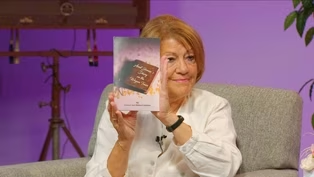
Clip: S7 Ep9 | 1m 14s | Dick Oakford shares how he adapted an 1859 family diary while preserving its voice. (1m 14s)
 New
Video has Closed Captions
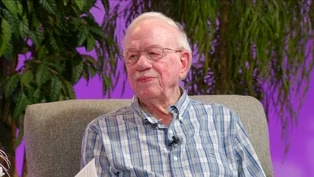
Clip: S7 Ep9 | 58s | A newlywed’s diary captures an 1859 trip from Metamora to California. (58s)
 New
Video has Closed Captions
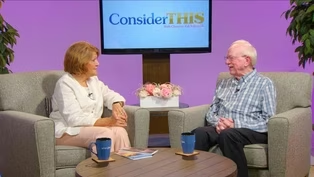
Clip: S7 Ep9 | 57s | Dick Oakford finds a connection to a relative through her words on nature and faith. (57s)
Providing Support for PBS.org
Learn Moreabout PBS online sponsorship New Episode
- News and Public Affairs

Top journalists deliver compelling original analysis of the hour's headlines.

- News and Public Affairs

FRONTLINE is investigative journalism that questions, explains and changes our world.
 New Episode
 New Episode


 New Episode

 New Episode
 New Episode

 New Episode


Support for PBS provided by:
Consider This with Christine Zak Edmonds is a local public television program presented by WTVP