In the Arena
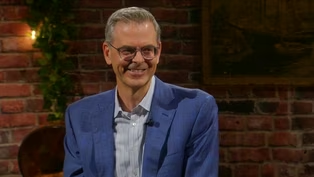
Dr. Marty Burke: Making Molecules, Making a Difference
Episode 6 | 26m 14sVideo has Closed Captions
Dr. Marty Burke shares how patients and mentors inspired his path in chemistry and business.
Doug Cruitt talks with Dr. Marty Burke about the people and experiences that led him into chemistry, research, and entrepreneurship. From a patient’s unforgettable question to building molecules with robots, Burke explores how University of Illinois resources, collaboration, and persistence helped turn scientific ideas into companies.
Problems playing video? | Closed Captioning Feedback
Problems playing video? | Closed Captioning Feedback
In the Arena is a local public television program presented by WTVP
In the Arena
Dr. Marty Burke: Making Molecules, Making a Difference
Episode 6 | 26m 14sVideo has Closed Captions
Doug Cruitt talks with Dr. Marty Burke about the people and experiences that led him into chemistry, research, and entrepreneurship. From a patient’s unforgettable question to building molecules with robots, Burke explores how University of Illinois resources, collaboration, and persistence helped turn scientific ideas into companies.
Problems playing video? | Closed Captioning Feedback
Where to Watch In the Arena
In the Arena is available to stream on pbs.org and the PBS app.
Providing Support for PBS.org
Learn Moreabout PBS online sponsorship(upbeat instrumental music) (upbeat instrumental music continues) - Sometimes the path we're meant to take is not revealed all at once.
Sometimes it begins with a person, a teacher, a mentor, a physician, someone who sees something in us or shows us something about the world that quietly changes the direction of our lives.
Theodore Roosevelt wrote about "the person in the arena," the one willing to strive valiantly to fail, to persist, and ultimately to dare greatly.
But sometimes we enter the arena because someone else inspired us to step inside.
Today's guest followed those sparks into a remarkable life at the intersection of medicine, chemistry, research, and entrepreneurship.
This is a story about science, but even more, it's about people, and what can happen when one life inspires another.
I'm Doug Cruitt and this is "In The Arena."
(upbeat instrumental music) (upbeat instrumental music continues) And I'd like to welcome Dr.
Marty Burke here on "In The Arena."
- Thanks, Doug.
- Marty.
- Thanks for having me.
- Ah, truly a pleasure.
- My pleasure.
- I'm excited for this conversation for many, many reasons.
One, what you've accomplished in your career thus far.
Also, a lack of knowledge on my part.
I'm gonna learn a lot of new things today.
Chemistry, never did well in that subject, but I'm excited to share your story with our viewership today.
- Awesome.
- Now, on the show, we talk about the Teddy Roosevelt quote and stepping into the arena.
It's not the critic that counts, it's the man or woman in the arena, that's marred by dust and sweat and blood.
But we like to go back in time to get a better understanding of where our entrepreneurs, our doers have started.
So, who was Marty before he was an entrepreneur, or before he was a researcher, or a physician or a chemist?
- Sure.
Yeah, thanks.
So, I grew up in a tiny town, about an hour northwest of Baltimore.
We had more cows than people, like a lot more, (both laughing) and one traffic light.
And it was an awesome place to grow up.
And I grew up dreaming about being either a baseball player or a doctor.
We had this amazing family physician, Dr.
Ford, I'll never forget him, who I just looked up to, like incredible, just admired so much what impact he had had on our community.
So, I think he was kind of, for me- - [Doug] Was he the only doctor in the entire community?
- By far.
I mean.
(both laughing) it was a very tiny town, so.
And I only realized in retrospect, actually, I'd never met a scientist when I grew up.
And I think that happens sometimes in a rural town, so.
But it was an awesome place to grow up.
I just treasured my time there.
And, you know, when I kinda got to the point of thinking about school, so my father worked for a company, which I don't think he liked that job very much, but the company had a policy that if a son or daughter of someone who worked at the company got accepted to Johns Hopkins, they could go for free.
- Wow.
- And I would never have been able to go to Johns Hopkins without that opportunity, but I grew up knowing that, that was a situation.
So, it was like a life mission for me (chuckles) was to get into Hopkins 'cause I was very, very passionate about trying to find a way to, you know, have that opportunity.
And I'll never forget the day I got accepted.
I think I jumped up so high.
I remember touching the ceiling, kind of felt like I was flying, so.
- Yeah.
- And, you know, I think my dad had kind of created that opportunity for me and I almost felt like this overwhelming sense of responsibility to try to make the most of it.
- Yeah.
- So, yeah, so, the Orioles never called, so I went to the doctor route.
- (chuckles) Yet.
- (chuckles) Exactly.
- Yet.
- I think that time has passed.
And so yes, I went to Hopkins and I was all in.
I thought definitely wanted to be a physician.
So, I was a pre-med.
And at Hopkins, it's funny, you actually have to major in something beyond pre-med.
You can't just be pre-med.
And so, I had a really great science teacher, John Linum, who taught my chemistry class.
And in retrospect, he was really amazing.
He used to go in the summer and do an internship at a chemical company and then they would borrow, he'd borrow beakers and flasks, and bring it all back to this rural town.
And I didn't realize it at the time, but he had had a synthesized aspirin in high school.
- Mm-hmm.
- And I didn't realize that was like weird and special.
It seemed like, you know, something that he- - Oh.
(chuckles) - Just whipped up.
And so when I got to college and then had to pick a major, I picked chemistry because I loved it.
I just remember that feeling that time I had made this medicine and remember holding it in my hands and almost having this moment of like, "Oh my gosh, like I made this thing."
And I think that stuck with me.
So, I majored in chemistry and I loved it, just absolutely loved it.
Also, my TA, who's now my wife, was an amazing inspiration to me.
And of course we didn't officially date until the class was over, I'll have to say that, but she inspired me so much.
And she was a chemist and she was doing, so she was like super young when she skipped through high school and college.
So, she was kind of doing her PhD when she was my TA.
Anyway, so I think I got very inspired by her and her passion for the molecule-making process.
I think it had a big impact on me.
And so then I was conflicted.
So, I thought I wanted to be a doctor and then all of a sudden I found this chemistry thing.
And so I was like this big tension 'cause I still loved both.
- Mm-hmm.
- So, in the US, you know, you can do both.
So, I had a chance to then apply to graduate school and was able to do one of those MD PhD programs.
- Wow.
- After working with Henry Brem at Hopkins.
And so I was very fortunate to still have those options open.
Went to graduate school, pursued both and just really fell in love with the molecule-making process.
- Wow.
- So, after a long, hard struggle to figure it out, I realized I was a chemist and that's what I do now.
- So, the chemistry aspect of your life didn't come on until a little bit later till college, so, - Definitely not.
- 'Cause I envision maybe a 10-year-old Marty mixing things.
- No.
- And exploding things.
- I was swinging at baseballs and trying to hit home runs.
- Okay, okay.
- That was the goal at that point, so, yeah, not the typical, you know, blow up your kitchen story.
Yeah, yeah.
- So, what other things, 'cause you've already mentioned a couple people, Dr.
Ford, that inspired you earlier in your life.
Was there anybody else that kind of looking back now, maybe you didn't know it at the time, that showed you a path that maybe you would not have known otherwise?
- Sure.
I mean, I think my parents who actually were very entrepreneurial in their own way.
So, my mom started her own school, which was always her dream.
- Oh wow.
- And so a preschool that she ended up getting fully accredited, it's now like this whole little campus that she has with all these kids.
- Wow.
- And watching her build that business I think was super inspiring, not just for the good times, but actually probably more for the bad times.
- Right.
- It was some rough patches and I think kitchen dinner table conversations and seeing her and my dad struggle through some of those.
And I'll never forget one, she had this inspector who was just really tough and would come every year and just almost always tried to find something.
So, it was a very stressful time.
But I think watching her and them kind of team up and get through that together, again, you don't realize these things at the time, but in retrospect, huge impact on me.
And then during the toughest times in your own life, you kind of remember that stuff.
- Yeah.
- So yeah, for me that was very inspiring.
I think I was very lucky in undergrad to get a chance to work in a lab.
This was Henry Brem who ended up becoming chief of neurosurgery at Hopkins and he just finished his stint and he was so inspiring.
So, he had invented a new medicine that you would put directly into the brain after you take out a tumor- - Wow.
- Called the GLIADEL Wafer.
That was his invention.
And one day, so it got approved by the FDA, while I was in his lab.
And then one day he invited me to come to the OR to scrub in with him, while he did a surgery.
- Wow.
- And he himself with his own hands removed this tumor and then off the shelf took a medicine that he invented and put it into this person's brain to try to help treat their brain cancer.
- That's wild.
- This was a life changing moment, as you can imagine.
- Yeah.
- It was incredibly inspiring to see that he did that, right?
I remember thinking like, "Oh my gosh, he made that drug."
And that was super inspiring.
And so yeah, so then I was in graduate school, I had a chance to go to Harvard and this guy Stu Schreiber was my PhD advisor who was just unbelievably inspiring.
He's one of these people, just absolute top of his game, transforming the field as I was there in his lab and kind of seeing someone at that level performing something at the highest level of the field and the creativity and the innovation.
So, he also was an entrepreneur, had spun out companies.
So, I think seeds were getting planted in my head at that time.
- Yeah.
- And those people really had a huge impact on me along the way.
- Did you know it at the time or have maybe this gut feeling that, that is a path I want to go down.
I don't just want to do chemistry.
- Yeah.
- I've Kind of already decided I'm not going to be the traditional physician?
- Well, the doctor thing I struggled with all the way to the end, to be honest.
I loved surgery and then the whole experience with the neurosurgery, I think I saw myself maybe going in that direction.
I loved my time as a medical student.
I learned so much kind of running around the hospital conflicted, "Am I a doctor?
Am I a chemist?"
It was like a wild time.
But then you see unmet medical needs and as one who can make molecules, you can't help but start dreaming, could I make a molecule that could help?
- Mm-hmm.
- I'll never forget this one, this amazing woman I had a chance to try to help take care of with cystic fibrosis.
She was a college student in Boston and I was in her room actually.
I remember drawing up on her whiteboard, probably in excruciating detail, my image of her protein in her lung that was not working and trying to, because I just learned about it in class.
So, I thought this would be interesting.
And she was like, "Look," she stopped me.
She's like, "Sounds like you know exactly what's wrong with me.
Why can't you fix it?"
- Wow.
- It was an incredibly insightful question and actually ended up seeding a thought around, "Could we have small molecules that might be able to replace her missing protein?"
We came up with this idea for molecular prosthetics.
And I think interacting with patients and having those kinds of conversations, there's just nothing else like it to stimulate kind of that direct connection to a problem.
And then as a molecule maker, you can just start dreaming about making a molecule that could help.
So, for me, that kind of became my identity, I think.
I think I'm just hardwired to try to make a difference, to try to do something.
I think I had my quarter life crisis about that time.
I was like (laughing) 22.
I remember doing the math and being like, "Okay, we've got this block of time.
I'm gonna try to do something with it."
So, it was a very inspiring time and I think experiences like that helped me see maybe that's who I am, right?
- Right.
- And this almost like power of making molecules, I think, became something that I really loved and wanted to try to do something with it.
- Yeah, I really want to jump right into that, but we're gonna kind of stay in the past- - Okay.
- A little bit longer because the molecular prosthetic is, I think, such a simple yet complex thing.
So, we will dive into that- - Sure.
- Absolutely.
So, we talked about mentors or those that inspired you, we talked about early on as you find your way.
And a lot of those that watch the show are actual, they're entrepreneurs as well and they're conflicted.
They have their full-time job.
They want to be their own boss.
They want to do things.
Were there any books or things that you would recommend that maybe you read at the time?
- Hmm.
- And the answer can be, "No, I was too busy."
- I think, and this is actually my wife, Christina, that I mentioned, she loves to read and actually she was shocked at how few classic novels I had read when she met me.
She just thought that was so weird.
And so she made me a list actually.
And I remember just diving in.
I must have read 20 or so in a spirit of like a few years- - Oh, wow.
- That were like her recommended list.
Anyway.
- That's true love.
- You can learn so much from reading just great novels I think.
- Yeah.
- Because it's almost like of course the best ones that stood the test of time, there's something universal that they've captured.
And so I would say there was a period of time where I had just intense, almost voracious reading of all of these classic novels.
And I think I learned so much during that time that probably helped shape a lot of my thinking.
So, yeah, not one in specific- - Not one?
Okay.
- But that group.
Yeah.
- All right.
So, let's dive into kind of, we'll just say the last five years or so, six years of Marty's life.
So, when did things really start to pick up in the lab and then commercialization and shipping products out into the real world?
- Sure.
Well, it goes back a lot further than five or six.
So, I was very fortunate to get the job here at the University of Illinois.
I started in 2005 and this place is amazing.
And I think what attracted me so much is that it was clear when I interviewed that if I came here, the only thing limiting me was gonna be me.
And I think as a person who is super ambitious and in the middle of a quarter life crisis, it felt like a really awesome situation to kind of finally find out what you're capable of.
- Mm-hmm.
- I think we're just so fortunate obviously as a land grant institution, just the resources.
I mean, it's just unbelievable.
It's like a billion dollar garage all around you.
And just the spirit of just go do something.
I mean, that just really rang for me.
- Yeah.
- Do something important.
That's the mission, right?
- Mm-hmm.
- And I remember that just really felt like home in many ways, intellectually.
The other thing I think is amazing about here is that there are a lot of places that are very strong in fundamental science.
- Mm-hmm.
- And then there are other places where people like to dream big.
And sometimes those are two separate things and it's almost like there's a tension between them.
It's kind of weird.
Here, you can have your head in the clouds and your feet on the ground at the same time.
- [Doug] I like that.
- And it makes us all very tall.
And I think there's something about that duality that really is special.
And I really felt that, that gave us a chance to spread our wings.
So, I started my lab in 2005.
- Mm-hmm.
- And it actually, we started around that idea of molecular prosthetics.
Could we develop molecules that could replace missing proteins?
That was kind of the takeoff point.
And there was this one compound from nature, it's called amphotericin.
It's like this very interesting molecule that's made by a bacteria that was known to form ion channels in human cells.
So, the idea was maybe that could be like a billion year head start to replace the CFTR protein that this brilliant kind of college student had asked me about in her room back in medical school.
And so we wanted to make that molecule in a way that we could fine tune it and understand it to hopefully turn it into a molecular prosthetic.
So, what we ran into then was the synthesis challenge.
The making part became this big bottleneck.
And we don't like bottlenecks.
They get in our way.
And so we started dreaming up new ways to make a molecule like amphotericin that would make it easier to make that one.
And this led to this idea that we now are all in on, we call it block chemistry, okay?
So, it's a double C, which is a wink to the carbon carbon bond that is the backbone of these types of molecules.
And it's pretty much a very modular way.
So, imagine you've got these building blocks and you just kind of snap them together using the same reaction over and over again.
So, the original idea was just to make that one molecule and we were able to make a derivative and made a really nice breakthrough and understanding how it worked.
But it was the process by which we made that molecule turned out to be so powerful and we realized that this might be bigger than this one molecule.
And then that took off and that became the whole block chemistry story.
- Can you remember the very specific moment, the minute of whenever there was this a-ha and you and your team around you like- - Yes.
- "Oh my goodness?"
- I can actually because my first student is named Eric Gillis and he actually was able to discover something that it was like a gift from nature.
We didn't expect it.
And that was the way in which we were controlling the reactivity of the building blocks, it act like a handle that sticks to this gel.
And then when you change the solvent, it unsticks.
It sounds so simple, but it turned out to be a way to purify all of the molecules along the way.
So, you could do it in a way that seemed, it was just super simple.
And that inspired us to think maybe we could do it with a robot because the purification part is a really difficult challenge when you're making molecules.
And so that, I remember when he ran into my office with his spectra that showed in this TLC and he's like, "You got to check this out."
And yeah, sometimes you have those special moments where you realize your spider sense kicks in, right?
- Mm-hmm.
- That something special just happened.
And so then we started dreaming about a robot that could put these molecules together.
And he was one of these tinkerers.
So, we weren't engineers, but we just started buying parts and sticking tubes together.
And this other student, Steve Ballmer, also joined and he was very good at taking his car apart and putting it back together.
So, just a lot of kind of not trained engineers.
- Right.
- But we all loved to do that type of thing.
And so we built the robot.
It wasn't pretty, but it worked.
And we were able for the first time to show that you could build this type of molecule on a robot by putting carbon carbon bonds together.
And then I think we realized maybe we had something special.
So, then it just kind of, at that point, head was spinning.
"How do we make this as big as possible?"
And that's when we spun out the first company, which we called Midasyn, which was named after the midabornate and it kind of sounded like medicine.
So, it was meant to be a little bit of a wink to that.
And we started right in the incubator at Illinois.
So, Laura Frerichs got me two labs at the Enterprise Works for some ridiculously cheap rent.
I think she was just excited that hopefully we could do something so she gave me a ridiculous deal.
And I had Steve Balmer and one other student that we brought in and that was it.
Roger Van Hoy, who was in the office of technology management was kind of like a business co-founder.
- Mm-hmm.
- And we started it right in Enterprise Works.
Roger and I both charged our credit card, $30,000 each.
That was our startup package to get the company going.
That our series A.
- You were all in.
- Yes, we were all in.
- Oh wow.
That's putting your money where your mouth is.
- Yeah, yeah, yeah.
At the time that was the way we got it started.
- So, in the lab, you have that spidey sense, as you said.
- Yeah.
- This feels like something good.
You're maxing out your credit cards, you got the space.
At what point for this particular endeavor did it feel like we made it?
Like, it's generating revenue- - No, none of that.
- None of it?
- We definitely didn't make it.
(both laughing) Actually, we were spiraling down fast.
- Okay.
- Yeah.
- And there was no revenue.
No, it was just like, "Could I get another credit card?
Wasn't sure."
I remember Roger and I debating whether we could buy one piece of glassware.
It was like $12, and having a big long conversation about whether we should use our remaining money to buy it.
Now we had gotten one contract from one company, but it was barely breaking even on it.
And of course, we were trying to bootstrap and use that time to do other things that would hopefully set up for a partnership, et cetera.
But I think, so what happened was we had a paper that we were working on publishing.
- Mm-hmm.
- And we ended up getting it published in the magazine called Science, which is one of the top journals.
That was huge because I think that put it on the map to the world that this was- - Validated it.
- It provided that kind of like, something's going on.
And it was a first.
It was the first time people had built this class of chemical matter on a robot.
And so I was very fortunate because I went to graduate school, I knew a lot of people and many of them had gone on and been venture capitalists.
And so I was able to make some calls and I think that's an important part of the story.
It's important that we all team up and help each other out because sometimes it's that phone call that makes a huge difference.
- Mm-hmm.
- And so yeah, a great friend of mine, Mike Foley, who now we actually founded a company together recently, made some introductions and then a bunch of other people helped make some introductions.
And then Third Rock Ventures stepped in.
And this was actually Alexis Borisy and then Mark Goldsmith.
Mark was a partner there and he came out to visit me, actually sat in my office in Illinois and asked me to tell him the story and I told everything and he clearly saw the potential.
And so then he flew me to Boston and present to all of the Third Rock team, which is an intense experience.
And they grilled me for like a day and a half.
And then in the end they wrote a check for $45 million.
So, it was an incredible experience.
- Wow.
- Yeah, yeah, yeah.
- So, you and your other partners are pitching as well or is it- - We were pitching our hearts out.
- Okay.
- Yeah, yeah, and it was funny because they do, they bring in a panel of experts, but they didn't tell me who they were bringing in.
So, I walk into this room and it's just filled with all my senior colleagues from across the country.
At this point, I was very early on in the process.
So, it was intense.
But I was very fortunate to have, at that point, I kind of felt like the wind in my back a little bit.
- Mm-hmm.
- Again, I think I'm just a very ambitious person at heart and it just felt like a moment that I really didn't want to screw this up.
So, luckily, instead of getting too nervous, I think I felt really excited.
And actually one of the people who walked in late was one of my former professors from when I was at Harvard.
There's a little bit of like, "I'm gonna show the world what I can do."
- Mm-hmm.
- I think that was going through my mind a little bit.
And it was a moment I felt like I was able to take advantage of.
So, it was a pretty special time.
- [Doug] It sounds like it.
- And Mark Goldsmith left Third Rock and decided to be the CEO of the company, which was huge.
And he still is the CEO of, this is now Revolution Medicines.
And he's been phenomenal, just a phenomenal builder and partner and really made it what it is today.
- So, tell me, let's talk a little bit more about Revolution.
- Sure.
- So what's going on there now?
- Yeah, so, as you may have heard, they just had a really recent big breakthrough in terms of pancreatic cancer, which the team there deserves just all the credit.
It's just a phenomenal achievement.
It's not yet a cure, so everyone is all in and there's just a passionate commitment to make sure no one's feeling satisfied until we get to that end point.
- Yeah.
- But it's an important step in that direction.
This is RASONQUE, which just got approved last month.
And for people with refractory metastatic pancreatic cancer, it doubled the overall survival in the phase three clinical trial, which obviously we're super excited and grateful to see.
- Mm-hmm.
- And it's part of a holistic.
So, the company is all in on an area of cancer treatment called KRAS.
So, this is a very important protein in many different types of cancers.
- Mm-hmm.
- And the hope is that now that they've established the concept in one of the toughest, that many other cancers could also be treated- - Wow.
- Using the same approach.
And yeah, the company goes all the way back.
So, the name Revolution Medicines, which we got a lot of flack for that, it sounds like almost like a too confident name, but it actually comes from the word redesigning evolution.
- Ah.
- So, actually the idea is revolution comes from that.
And the idea was to use that modular chemistry to take nature's molecules and then redesign them.
- That's amazing.
So, we always ask our guests to write something on the whiteboard.
- Sure.
- So something meaningful to you.
Can you tell us about what's up there, please?
- Sure.
This is our block chemistry.
- Okay.
- So, now in my mind, this is what molecules now look like.
- Mm-hmm.
- This would be a blue, red, and a green block.
Just imagine them just like you would put blocks together as a kid.
The black lines are the key.
Those are the carbon carbon bonds- - Okay.
- That stitch those blocks together.
And the cool part is that a robot can put that molecule together.
That molecule could be a drug.
It could be a material that harnesses sunlight, turns it into energy like a solar cell.
It could be a perfume.
It could be a dye.
It could be all kinds of interesting things that help make the world a hopefully better place.
- If you could either go back to, Marty, one hour north of Baltimore as a young child and give him a piece of advice or anybody that might be listening now, what would you give from an innovation entrepreneur standpoint?
- Sure.
Yeah.
I think I would go back and tell myself, spend a lot more time being excited about what you're trying to do than afraid of failing.
I probably wasted a lot of time worrying and stressing about failing.
And it's the times where you're giving yourself the freedom to be confident and creative and dream up something and then just assume it's probably possible, even if everybody else doesn't think so.
Those are our moments where you really try to figure out how you might make a big difference.
So, yeah, spend as much time as possible dreaming about how you're gonna make a difference and spend as little time as possible- - I love that.
- On fear and failure.
Yeah.
- That is great.
Marty, thank you so much for stepping into the arena today- - My pleasure.
- And sharing your story with our audience.
- Thanks so much.
- Thank you.
- Great talking to you.
Yeah.
- Maybe one of the greatest lessons from Marty's story is that changing the world is rarely a solo endeavor.
It's about recognizing the resources around you and having the courage to use them.
The power of a great university, the brilliance of researchers, physicians, students, entrepreneurs, and partners, and the ability to bring those people together around problems that sometimes seem impossible to solve.
Marty and the teams he's helped build have already done work that is changing lives and may ripple across generations.
But perhaps what inspires me most is the audacity to look at everything that's already been accomplished and still say, "We're not done."
There are more problems to solve, more discoveries to make, more people to help, and so much more work to do.
Maybe that's the challenge for all of us.
Whatever your arena is, find your people, use the resources around you, and dare greatly enough to believe there's still more that's possible.
I'm Doug Cruitt, and we'll see you next time "In the Arena."
(gentle upbeat music) (bright music)
Providing Support for PBS.org
Learn Moreabout PBS online sponsorship New Episode
- Science and Nature

Explore scientific discoveries on television's most acclaimed science documentary series.
 New Episode
- Science and Nature

Capturing the splendor of the natural world, from the African plains to the Antarctic ice.

 New Episode
Support for PBS provided by:
In the Arena is a local public television program presented by WTVP