A Shot of AG
Larry Tombaugh: Farming, Family and a Famous Name
Season 7 Episode 3 | 28m 11sVideo has Closed Captions
Streator farmer Larry Tombaugh shares a life of resilience, innovation and family history.
Rob Sharkey sits down with Streator farmer Larry Tombaugh to trace a life shaped by agriculture, family and change. Tombaugh recalls losing his home to lightning, surviving the 1980s farm crisis, building side businesses, joining Illinois agricultural leadership and experimenting with new farming practices. He also shares stories of his relative Clyde Tombaugh, who discovered Pluto.
Problems playing video? | Closed Captioning Feedback
Problems playing video? | Closed Captioning Feedback
A Shot of AG is a local public television program presented by WTVP
A Shot of AG
Larry Tombaugh: Farming, Family and a Famous Name
Season 7 Episode 3 | 28m 11sVideo has Closed Captions
Rob Sharkey sits down with Streator farmer Larry Tombaugh to trace a life shaped by agriculture, family and change. Tombaugh recalls losing his home to lightning, surviving the 1980s farm crisis, building side businesses, joining Illinois agricultural leadership and experimenting with new farming practices. He also shares stories of his relative Clyde Tombaugh, who discovered Pluto.
Problems playing video? | Closed Captioning Feedback
Where to Watch A Shot of AG
A Shot of AG is available to stream on pbs.org and the PBS app.
Providing Support for PBS.org
Learn Moreabout PBS online sponsorship(upbeat music) - Welcome to "A Shot of Ag."
I'm your host, Rob Sharkey, Streator, Illinois.
What does it have to do with the dog on Walt Disney?
We're gonna to find out.
Today we're going to be talking with Larry Tombaugh from Streator, Illinois.
How you doing, Larry?
- I'm doing great.
- Tombaugh.
- Tombaugh.
- Yeah.
- Yeah, it's not a common name.
- You should spell that better.
- I didn't have anything to do with it.
It used to be Dunbach in German, and then the guy when he landed in Baltimore couldn't write it well and said, "Hello, Mr.
Tombaugh."
- [Rob] Oh.
- So it's changed over the years.
- Fun history lesson.
For the people that don't know, where is Streator?
- You can't get there from here.
- [Rob] Yeah.
- It's in the middle of I-80, I-39 and I-35.
39, I'm sorry.
You put a dot in the middle, that's Streator.
We never though we'd get a Walmart, but we did.
- Oh, well, congratulations.
- Yeah.
- It's not on the old 66, is it?
- No, we're 30 miles west of 66.
- Gotcha, okay.
And you grew up there?
- I did.
- Farm kid?
- Farm kid.
- Yeah, we got proof of it right here.
What's this?
- That's Puff.
- Puff?
- [Larry] That's the horse.
- [Rob] Dude.
- [Larry] Yeah.
The horse is Puff.
- Yeah.
Yeah, no, okay.
But no, raised her from a foal, trained her, and showed her and rode her.
It was a great experience.
And I think working with animals, horses especially, are good training things.
- [Rob] So you showed horses?
- Just one horse.
- Okay.
- It was a one-horse show.
But I showed cattle and I showed hogs.
I had a hamp gilt when I started out in 4-H and then we were milking cows, so I had Holstein heifers and stuff.
So you had the aggressive parents that would let you show multiple livestock?
- Yeah.
- Yeah, mine, no.
- They're like, pick one.
A steer or a hog, that was it.
- You gotta know your children, I guess.
- So what kind of farm was it when you grew up?
- Well, it was a dairy farm.
- [Rob] Okay.
- Yeah, well, actually early on we had hogs.
My dad had hogs too because I remember going out in the mornings you know, when I was five and six and go out and see the baby pigs.
And then when we moved to the big house, I would get up and go out to the dairy house.
- [Rob] The prison?
- No, no, this was a real fancy house.
- Oh.
- Yeah.
We just stayed in the tenant house, which later on you'll find out this is where I moved to when Kathy and I got married and it got hit by lightning and we lost everything.
So I was in that house a couple times.
- Okay, you jumped ahead.
- I'm sorry.
- Kathy, your wife.
- My wife, Kathy.
Where'd you meet her?
- I met her at the University of Illinois.
- Oh.
- The girl of my dreams.
- Okay.
- And part of the story is, do you ever have a period of time where just a day or two is so momentous and makes such a difference in your life?
- [Rob] No.
- I'm sure you have.
- Yeah.
- So I don't know where you have to go to get a picture of this, but I always wanted to be on the front page of the paper in a good way.
- Yeah.
Well, this was taken on a Friday and was in the The Daily Illini on Saturday, October 9th.
And it's a picture of me capturing a steer on the quad.
Now there was an incident like that just not too recently.
- Yeah, they had one get out.
- Yeah, but I was one of the chairmen for Illini International on campus.
- [Rob] Let me see that.
- [Larry] Oh, please do.
- Yeah.
- And we had a steer on campus and took it to the quad and one of the queen candidates was showing it.
- That's you?
- That's me.
- Hey, look at you.
Action shot and everything, like yeah.
- Yeah.
- Okay.
- But that's a good thing.
But it was a momentous time.
Not only did I get my picture on the front page of the Daily Illini.
- [Rob] Yeah.
That afternoon I went to the Dad's Day concert and went with a friend of mine and we were sitting there and Kathy was singing in The Girls Next Door, which is a quartet.
- Oh.
- And I looked out and here's this beautiful girl, long legs, short skirt, blonde hair, blue eyes.
And it's like, now somebody like that, if she were a farm girl, would be a great person to meet.
- Yeah.
- The next night we had a kegger.
I was in farmhouse.
- I don't know what that is.
- I don't either-- - Yeah.
- Because I didn't drink.
But she was in ZTA and our houses were just separated by a hedge.
- [Rob] Oh.
- And-- - You can do a lot of things with a hedge.
- I found that out.
- But, so anyway, she wasn't going to go to the exchange and I wasn't going to go to the exchange.
I had two hour exams the next day.
She had a rough day the day before, went home to San Joe's and then came back and she had an hour exam the next day.
And my roommate said, "Hey, you're the one pushing to meet these girls.
You got to go."
I said, "Okay.
And I guess we're hosting it, so I'll be there."
And her roommate had been in my chem class the semester before.
- [Rob] That was your in?
- Well, it helped.
- Yeah.
- And she said, "You got to go."
So we went, we met, my big brother was there and he was kind of moving in on her and I was just like, "Hey, come on.
We're playing Eucher."
- You brussled up, huh?
- I kind of did.
- Yeah.
- I wasn't outgoing like that.
- Well, you just had a big day with a steer too.
So you were all like.
- I was still hyped up.
Sure, yeah.
- Yeah.
- But I walked her home and we had a nice talk.
- [Rob] You walked her home next-- - Well, I took her the long way around.
- Around the hedge?
- Around the block.
No.
No, but yeah, it's wonderful.
I always tell young people, marry above your station.
And I absolutely did.
- That wasn't very hard for you.
- No, I mean, it's easier for a guy like me, you know?
- How long you been married?
- 52 years in a week and a half.
- You think it's going to last?
- It's still got a chance.
- Yeah.
- Well, let's hope so.
- I hope so.
(Rob ringing bell) - Okay, what were we talking about?
Oh yeah.
So you married her.
Tell me, and then you moved into a house on your family's farm?
- Right.
- And then what happened with that?
- Well, we got married in 74 and in 78 it got hit by lightning.
We happened to be gone to some relatives over by Walnut Grove.
And my mom called on the phone and she was crying, and I though, "Oh no, my dad had a heart attack," because he had periods of heart trouble.
And she said, "No, not that.
Your house got hit by lightning and we don't think we can save anything."
- [Rob] Oh, the whole thing.
- Whole thing.
- You know, that gets kind of glazed over when people say that.
But when you think about your house and being a total loss, it's not like a tornado or something.
It's just like everything is gone.
All your memories and that, that had to be pretty tough.
- It was really tough.
And one of the things that I like to talk about is the fact that Kathy and I came from families, hardworking, and we just dug in and had to work through it because shortly thereafter, started raising hogs.
We sold the dairy cattle and we were paying 24% interest on our operating note.
- Oof, 24.
- 24, yeah.
- Yeah.
So on top of that, I mean, so you went through the 80's.
- Yeah.
- But you did make it through the 80's.
- We did.
And how we did that was another commercial, is that, and this is one of the license plates.
- [Rob] Roof Doc.
- Yeah, Kathy and I formed Tom Cat Roofing.
- Growl.
- Yeah, and this was one of the license plates.
- We do hedges too.
- But no, Kathy had four part-time jobs and still couldn't support me like I would like.
- [Rob] Yeah.
- And so I-- - [Rob] She had four part-time jobs?
- Right.
- And you were farming.
- With the kids being small, it was tough.
- And then what, you started putting on roofs?
- Well, I started selling computers first.
- Okay.
- I sold computers for nine and a half years.
- All right, well-- - You remember the 80's.
I mean, in 82 I wanted to get a computer and I went to-- - [Rob] Yeah, I was nine.
- You were nine?
- [Rob] Yeah.
- Okay.
- I do remember IBM.
- No, this was actually-- - Coleco.
- It only had 64K, no hard drive, and it was $8,200.
- Oh my gosh.
And you were selling those?
- No, no.
I went to a seminar in Decatur and he said, "Larry, don't get in a hurry.
They're going to make them next year too."
And he was right.
But then in 86, I got started working with Charlie Engelhardt, Englehardt Ag Services down in Lincoln, Illinois.
And for nine and a half years, I used my ag econ background and stuff to help farmers.
And when we got the ability to have a modem and I could work on their computer from my place, that was great.
- Yeah.
You did make it through the 80's.
A lot of people didn't.
- Yeah.
- Why do you think you made it?
- Well, besides selling computers, we started this little roofing company and we worked hard.
We found a great product and we worked hard.
We gave people fair prices.
We stood behind our work.
And, you know, I think people have to look outside your comfort zone.
Previous to that too, I had worked with my great uncle in farm management for three years.
He was managing 20,000 acres.
And one day comes out in history.
Do you remember election day in 1976?
- I was three.
- Okay.
Well, you probably still remember it.
We voted because the polls opened at six o'clock and we drove to Brinkley, Arkansas because we had an appointment down there.
He had 10,000 acres he managed in Arkansas and we were going to meet with the bank president the next morning.
- [Rob] Okay.
- So made that drive 500 miles about.
Next morning we got up and we went to the bank and it was right after the election between Jimmy Carter and Ford.
- Yeah.
- We walked in, we meet the president of the bank and he was giddy as a pet coon.
- Yeah, he was from Carter was from there, wasn't he?
- No, Carter was Georgia.
- Oh, okay.
- But this fella had been Jimmy Carter's roommate at Annapolis at the Naval Academy.
They'd been best men at each other's weddings.
- Oh, so he was in now.
- He was a VIP.
- He had gotten a call even, you know, just the next morning.
He got an invite to the inauguration-- - Yeah.
- Front row seat.
- Nice.
- Yeah, it was fun.
- Okay.
Well, okay, we'll finish up with what you got.
This is, what, your farmstead?
- Well, that's a picture from quite a long time ago.
It's changed.
We've put on more bins and stuff, but just to give you an idea, this is where I lived and that would've been where the house was that burnt down.
- Okay.
- And now we've put.
- Well, you do sound like an old farmer now.
That's where the old house used to be.
Down where that cow usually stands.
- Well, I'm going to be 75 next week, so three quarters of a century, you got to have some memories.
- That's right.
- Or else you don't, then your adult brain is gone, so.
- Let's switch gears.
- Okay.
- Tell me about your cousin.
What'd he do?
- I have a bunch of cousins.
Which one, Clyde?
- You know, the guy.
- I'm kidding.
- The guy, the space guy.
- Well, he's not a space guy, but he was an astronomer.
Clyde Tombaugh.
- Just go with it, man.
- Okay.
I mean, I was the only kid in fourth grade had a relative discover a planet.
- [Rob] I bet you were.
- But he was an interesting guy.
When I was in eighth grade, I had Ms.
Sabo for math, and she was 80 years old and she had taught Clyde, my mother and me.
- [Rob] Oh my gosh.
- And actually, Clyde dedicated his book to Ms.
Sabo, "The Star ThaT Did Not Twinkle. "
- [Rob] That's what he called her?
No, he called the book.
- Oh.
- He called her Ms.
Sabo, I'm sure.
- I was gonna say.
I got a few teachers I would have called that too.
- No, but anyway, we were in math class and I said, "So Ms.
Sabo, how was Clyde as a student?"
And she said, "Well, as you know, I taught school for a long, long time.
And of all the students, he was the most precise student I ever had.
We were studying European geography.
He had to know every road, every mountain, every river, every street, everything.
And that's what it took because he grew up in Streator, but at 14, the family moved to Burdett, Kansas.
The thing that I hate is you drive into Kansas, it says home of Clyde Tombaugh, and it's just like he was born in Streator, come on.
- Well, we call ourselves the Land of Lincoln.
- He wasn't born here either.
- That's true.
- Yeah.
- Let Kansas have it.
- They don't have anything else.
- Speaking of Lincoln, I've got a couple stories about that is, did you know that one of the five original Gettysburg addresses was in a window, a five and 10 store for 10 years in Streator?
- Okay, that's random.
Did they know what they had?
- Oh yeah.
- And they just put it in a window.
- Yeah, but didn't think it was worth preserving.
- It's just a piece of paper.
- The reason it was there was because Lincoln.
I know we're getting away from Clyde, but Lincoln used to work from Bloomington to Ottawa in the courthouse and stuff.
And so that's why in Streator, Bloomington Street is one of the main drives.
But when Abe Lincoln was there, one wintertime, there was a blizzard and there were no rooms at the hotel.
And a guy in the courthouse there came in to see him and they struck up a-- He was just a dirt farmer and struck a thing.
Said, "Well, hey, why don't you come stay with me tonight?"
So he did.
He went and stayed with this fellow and they had just the best time.
- [Rob] Yeah.
- They became long lost friends.
And he actually got invited when the Lincoln-Douglas debate was in Ottawa, he got a front row seat to be there with all these other famous people.
But one of the interesting things was the farmer's son and Robert Todd Lincoln both got accepted at Harvard.
- Ah.
- And Abe Lincoln wrote a letter to the president of Harvard and said, "Hey, could you let my son room with this kid?"
- Of course he's going, "Yeah, it's Abe Lincoln right now."
- Yeah.
- Yeah.
- And so they did.
- Yeah, okay.
- Okay, but back.
- Focus.
All right, Clyde.
Clyde Tombaugh.
- Yeah.
- Discovery of Pluto.
- Pluto, yeah.
- Yes.
- Named for the Disney character.
- He really did name it after the Disney character.
- Well, actually, Pluto is the god of darkness in Greek mythology, so he's using that as his escape thing.
- All right.
- So it's maybe not such a big deal anymore because it happened so long ago, but it was a big deal when they figured out, "Hey, we got nine planets now."
- Really big deal because the orbit for Pluto is 247 years.
So the chance of a person's lifetime fitting in the very small window that it was visible-- - Yeah.
- Was pretty small.
- And then now they say it's not a planet.
- Well, it's a sub-planet or dwarf planet, but the Streator kids wrote letters trying to make sure they got kept it as a planet.
- It's a planet.
- Close enough for me.
- Just, yeah.
Did you hear where they say now the planets weren't like collected, they were actually birthed out of the sun?
- Did not hear that.
- Yeah, well.
- Was that in the paper yesterday?
- Google it.
- Okay, Google it.
- So it had to be pretty cool.
I mean, did you meet-- - I met Clyde.
Yeah, I met him, you know, I was writing letters to him when I was in fourth grade, and then in sixth grade he came back for a family reunion and had his Edsel and he said, "Larry, come on here."
- [Rob] He had an Edsel.
- Yeah.
- [Rob] Of course he did.
- He did.
And he came over and said, "Hey, Larry, come here.
I want to show you something."
So we looked in the back seat of his car and he had round circles in brown paper and opened them up and he said, "What do you think those are?"
And he said, "They look like hunks of glass to me."
And he said, "Well, they are, but they're lenses.
I'm making another telescope."
In his lifetime, he made about 14 telescopes.
- [Rob] Oh.
- Most of them are still in the Smithsonian.
They bought them.
- So probably back in the day, these were-- - Pretty rare.
- Yeah.
- Pretty rare.
- Okay.
- But this one was one that he was making.
And I said, "Well, how do you get the curvature right?"
And he said, "Well, it's really scientific.
I take a Campbell soup can and I put the smallest hole I can in it, and I put a light bulb 27 feet away.
And when I can get all the light to go through those lenses, I've got the curvature right."
- See, everything's.
They overthink everything these days, yeah.
Okay.
It's very cool.
He's passed, right?
- Right, he passed.
- Yeah.
- Yeah.
- Okay, tell me about, you went through the IALF, the Illinois Ag Leadership Foundation.
- I did.
- In 1988.
Was that the first class?
- Third class.
- Third class.
- Yeah, I've always been third class.
- That's clever.
Larry, I do the jokes here, okay?
- I'm sorry.
- Why did you-- Because that's a time suck.
Why'd you do that?
- Well, time suck is relative.
I thought it was a time builder because it was a new thing.
You know, they've had two classes beforehand and I was kind of an overachiever.
And I had applied previously and was rejected, and I though, "Well, I'm going to try again."
- [Rob] That's not unusual for that class.
- No, no.
- Yeah.
- It's a tough-- - To this day, it's still-- - It's 30 people out of the state of Illinois.
And I was very fortunate to-- They lowered the standards the third year and I got in.
- It's like, "this guy won't go away.
And his cousin did the whole Pluto thing.
Just let him in."
- Yeah.
But I do have to tell you, I had great experiences.
We went to Spain, Morocco, and Hungary on our trip.
And of course, we went to Washington DC the year before.
But the scariest thing I had was my interview in January of 1988 by Orion Samuelson.
- Oh, here we go.
- Here we go, yeah.
And he was doing hostile interviews.
- Oh, he was?
- I was the first one up, and he really tried to put it to me, I guess, as far as-- - See, I wouldn't do that.
- No, you're too tired.
- Yeah.
- No.
- Just remember that.
- This was just for practice though.
I mean, it wasn't a real thing.
- No, he enjoyed it.
- He was great.
But, you know, the whole thing was to try and get us to think how we would defend ourselves out in the public for all the chemicals we were killing people with and all the things that we were ruining our country with.
You know, I had some great conversations after that with stewardesses.
Now we have to call them flight attendants, but I bored them a lot because-- - [Rob] They prefer that, yeah.
- Yeah.
- But no, I'm on a mission to teach people what agriculture is and what it can do.
And you know, can cut out all those products, just decide which half the population you want to die.
- Yeah.
- I mean, it's simple.
- Now, Orion was a great voice for agriculture and it was different back then.
Today's social media has kind of changed everything.
Farmers are literally showing the day in the life of what they're doing, good, bad, and indifferent, and people want to see that.
But yeah, when you got a call from Time Magazine or the Chicago paper, a farmer had to be really wary about what they wanted.
- Yeah.
- Yeah.
- I hear they're putting farmers on radio and TV now.
- That's a horrible idea, yes.
Horrible, horrible, horrible idea.
Okay, so you went through that.
- Sure.
- You went to Spain, Morocco.
Where was the other one?
- Hungary.
- Okay.
- Spain, Morocco, Hungary, and Austria.
- And Austria?
- Well, that was just to fly into Vienna to get on a bus.
And then we went over into Hungary, but we sat at the border for five hours because one of the guys forgot his passport.
- [Rob] Well, who was it?
- I'm not saying, but an 18-year-old.
- Can I guess?
- There were only 30 of them, and you know I'm not in it.
- Was it Max?
- Is it Max Armstrong?
- No, this is ag leadership.
- I know, I just-- - No, he wasn't in that.
- Okay.
all right.
- Because he was in Indiana anyway.
- Okay.
- But, you know, we sat there the whole time, this 18-year-old kid with a machine gun nervously walking down the aisle of our bus.
- Oh, that'll wake you up, won't it?
- Yeah, it was interesting.
But another little sidebar is when we flew into Vienna, we were hungry, so seven of us got snacks and it was 160-- - Sausages?
- No, just lights of Coke and things like that.
165 bucks.
- It's a joke.
- Vienna sausages, but yeah-- - But the next night we went out for supper when we were in Hungary.
- [Rob] Yeah.
- And five of us went out for a five course meal, tip and everything, $44.
- Oh, all of you?
- Uh-huh.
- Okay.
That's quite a difference, isn't it?
- Yeah.
- Yeah.
- Well, we got off the bus and they wanted to buy our blue jeans.
- Hey, everything has a price.
- And when we went to the hotel at night, we had to turn our passports in so we couldn't go out.
- Oh, they didn't want you out there raising a ruckus?
- Yeah, rebel rousing.
- They didn't do that when we went to Japan and Panama because our person running it didn't have a globe apparently.
- Yeah.
- But yeah, they let us go out and do whatever.
- Well, they're right next to each other, right?
- They are not.
- We flew back into Denver to get to Panama.
So your name of your farm is Experimental Farms?
- Right.
- That's clever.
- Well, we used to make mistakes and now we just call them experiments.
- You just put flags out.
If you put enough flags in, it's an experiment, right?
- Well, I started.
I did my first no-till back in 1973, which was way too early.
- Well, was it?
It didn't work?
- Well, I mean, I got a conservation planter from the conservation department.
It was not good.
- Okay.
- Herbicides weren't good.
We didn't have Roundup and stuff yet, and the seeds weren't.
So I mean, the neighbors got a really good laugh out of it, so there was some good-- - Yeah.
- That came out of it.
- I think today, we don't even realize like with the seed coating, what a difference that makes.
- Sure.
- In getting-- Were you just doing soybeans or did you try?
- Well, I just tried it on a five acre piece that dad let me have.
- [Rob] Okay, we'll, you know, five acres.
- Yeah.
- So are you still experimenting on your farm?
- Yes, I still make mistakes, so we call them experiments, but we do try and analyze a lot of comparisons now that my son and daughter have moved back to the farm with two granddaughters, and we've changed the name to incorporation it, LLC, yeah.
- Well, it's gotta be fun having the kids back.
- Yeah, I'm learning all the mistakes I've made the last 50 years.
- They're great at pointing that out, aren't they?
- Oh, they're good.
They are very good.
- I don't remember doing that to my dad.
- Yeah, probably not.
Who are we kidding?
- Yeah.
- Nobody's going to see this anyway.
- But I think that's a lot of farmers, whether they like to admit it or not, that's kind of the dream, but sometimes they're afraid to have the kids come back because they don't know if the farm is big enough, all this stuff.
And here you've got two that come back.
- Yeah, well, my dad died in 94 of a heart attack, so I had the farm since then, and we've gone to no-till, strip-till, and I do work with Brad Forkner of Nutrient Management.
- [Rob] I know that guy.
- Yeah, he's a great guy.
- Yeah.
Got a lot of knowledge.
We've worked together for 25 years.
- Great, and that's an opinion.
- Okay.
Well, you're welcome to your opinion.
I'm welcome to mine too, so.
But no, we're doing a lot of things.
We're testing, you know, a lot of biologicals and just a lot of really neat things.
- Uh-huh, you like that strip-till?
- I love it.
- Yeah.
People that go to that seem like they stay with it.
- We stripped everything last year.
And yeah, I think it's good because for the corn ground, going into bean ground, going into corn, you know, we have fertilizer put down.
- Yeah, so people that don't know what it is, in the fall, do you make your strips?
- We have-- - So you go through, you just make a strip.
- Right.
- And then you plant right into that strip in the spring, and that's the only part that you're fertilizing, so you don't have to fertilize the entire field just right where the seed is.
- And we do a lot of things.
We got a 1994 John Deere planter.
Ring your bell.
(Rob ringing bell) But it's got all kinds of good stuff on it because we've updated-- - All the precision stuff.
- All the precision stuff.
And I've got a-- - Precision planning.
(Rob ringing bell) Got a 1995 Hagie that we put a cap stamp pinpoint on.
(Rob ringing bell) - All right, man.
- And an Outback MAX, so I got all the steering stuff.
- Nice, we're done.
- Okay.
- I like your orange bell, by the way.
- You know what that's from?
- No.
- The game Pit.
- Okay.
- Yeah, I'm surprised you don't know that.
- I don't know that.
I don't get out much.
- Well, it's a board game from like the 70's.
- Yeah, I do.
I've heard of it, but I never played it.
- Okay.
Larry, if people want to get ahold of you, where do they go?
- Well, the email I probably prefer is nmslarry@gmail.
- [Rob] Okay.
- Because I do work with Brad and-- - [Rob] I was gonna say, that's Brad's deal, isn't it?
- That's Brad's deal.
- Yeah.
- Yeah.
- Okay.
Do you partner with him or just work with him?
- Well, I'm not a partner legally, but I mean, we've worked together for 25 years.
- Do you got some good stories on him?
- He's pretty clear.
He's just a wonderful resource.
- Okay, all right.
- He's pure as the driven snow.
- So if you had to say who was the better interview, was it me or was it Orion?
- Well, I mean, it's not a comparison because of the-- - Thank you.
That's all the time we have.
- The time difference, you know this-- Yeah.
- Yeah.
- And you weren't-- - I joke, he's a great voice for agriculture and he's passed away now, but yeah, he made farming better.
- And I would say you're a great voice for agriculture.
I watch "A Shot of Ag" and different things.
- I'm glad somebody does.
- I love those interviews in Nashville, and it's like, "Hey, I know that."
- That's the other.
- We can't, that's a RFD Show.
- I know.
- Yeah.
- I can't talk about that.
- They frown on that here.
- Is that right?
- Yeah.
They're like, "You have another show?"
- Maybe you need to get a third show.
- You don't have time to talk about that, Larry?
Larry Tombaugh from Streator.
Larry, you are a pleasure to talk to.
You're a wealth of knowledge, and it's an amazing life that you lived, and the way that you talk about it and tell stories is a lot of fun.
Agriculture and farming can be very difficult.
It can be very stressful.
It can be.
You know, it can be all that.
But I look at you and I look at someone that has done all that and has seemed like he's enjoyed his life.
- You have to take every day, you know, enjoy it.
- Yeah.
- There's no guarantees.
- And don't let the hedges.
- Stop you, yeah.
- Don't let the hedges get in your way.
- But I think it's really important at this time because agriculture's going through the same thing we did in the 80's.
- I hope not.
- Well, I hope not too.
- Yeah.
- But it's gonna to be thin margins, high interest.
And for young people out there, I would really encourage them to just find somebody that you can talk to and not be afraid to take chances.
Don't go crazy.
- I think, yeah.
I hope that it's not as bad.
I don't think the interest is as bad, but anyway, Larry Tombaugh from Streator, Illinois.
Thank you very much.
Everybody else, we'll catch you next time.
(upbeat rock music) If you enjoyed today's episode, be sure to explore more of our local content.
You can connect with us on our social media platforms, visit our website, or download and watch the free PBS app.
We can't wait to see you next time on "A Shot of Ag."
(soft music)
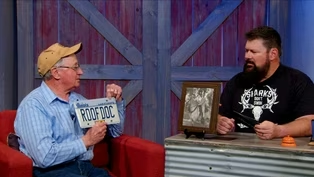 New
NewA House Fire, 24% Interest and the Farm Crisis
Video has Closed Captions
Clip: S7 Ep3 | 1m 44s | Larry Tombaugh recalls losing his home to fire and surviving the 1980s farm crisis. (1m 44s)
 New
NewLarry Tombaugh's Advice for the Next Generation
Video has Closed Captions
Clip: S7 Ep3 | 1m 2s | Larry Tombaugh shares hard-earned advice for young farmers facing uncertain times. (1m 2s)
 New
NewThe Tombaugh Family Connection to Pluto
Video has Closed Captions
Clip: S7 Ep3 | 2m 5s | Larry Tombaugh recalls his connection to Clyde Tombaugh, who discovered Pluto. (2m 5s)
Providing Support for PBS.org
Learn Moreabout PBS online sponsorship New Episode
- News and Public Affairs

Top journalists deliver compelling original analysis of the hour's headlines.
 New Episode
- News and Public Affairs

Today's top journalists discuss Washington's current political events and public affairs.
 New Episode
 New Episode
 New Episode
 New Episode
 New Episode
 New Episode
 New Episode
 New Episode
Support for PBS provided by:
A Shot of AG is a local public television program presented by WTVP