WTVP EcoWatch
Giving Clothes a Second Life at Illinois State
Clip: Season 3 Episode 4 | 3m 1sVideo has Closed Captions
ISU’s Share Shop and Fix It Friday keep clothing in use and out of landfills.
At Illinois State University, sharing and repairing help reduce clothing waste. The Share Shop provides free secondhand clothing for students, while Fix It Friday offers repairs for students and community members. Learn how these sustainability programs extend the life of everyday items and address the environmental impact of disposable fashion.
Problems playing video? | Closed Captioning Feedback
Problems playing video? | Closed Captioning Feedback
WTVP EcoWatch is a local public television program presented by WTVP
Support for Ecowatch is provided by the Backlund Charitable Trust
WTVP EcoWatch
Giving Clothes a Second Life at Illinois State
Clip: Season 3 Episode 4 | 3m 1sVideo has Closed Captions
At Illinois State University, sharing and repairing help reduce clothing waste. The Share Shop provides free secondhand clothing for students, while Fix It Friday offers repairs for students and community members. Learn how these sustainability programs extend the life of everyday items and address the environmental impact of disposable fashion.
Problems playing video? | Closed Captioning Feedback
Where to Watch WTVP EcoWatch
WTVP EcoWatch is available to stream on pbs.org and the PBS app.
Providing Support for PBS.org
Learn Moreabout PBS online sponsorshipLocally, the Illinois State University Office of Sustainability is doing its part in keeping clothes out of landfills and on the backs of students who need them, and it's done by sharing and fixing.
- The Share Shop is ISU's free secondhand store.
It started several years ago with a group of students from student government who were interested in putting together kind of a career closet of some professional clothing that students could use for interviews and that type of thing.
And they were looking for a space to be able to do that.
I have a background in fashion design and merchandising as well, so when they approached me, they approached the right person (chuckles) as far as I've always wanted to do something like this, and so we kind of put our heads together and opened the Share Shop.
We get donations from students certainly, but we also get a lot of donations from the community as well.
So all across Bloomington-Normal, alumni will send us donations.
We'll get donations of Redbird clothing, which is always fun, or even graduation gowns.
So the response has actually been a little overwhelming at times with how many donations that we get, and it is a small space, so, (chuckles) you know, but sometimes can get pretty crowded in here, but it's very exciting.
The fashion industry is one of the world's biggest polluters, whether it be the environmental impact of the textiles themselves, of how they're produced, polyester is made from petroleum, so, you know, our reliance on fossil fuel, that being one of them, when we wash things with polyester, especially things like fleece, those, when we wash them, you know, they'll shed those microplastics and it becomes a real problem for us.
So the choices, as far as textiles, is important, thinking more about some of those natural fibers and trying to stay away from any of the synthetics that are made from petroleum.
(sewing machine rasping) - Fix it Friday is a repair shop that we have open every Friday in the office.
People from the community and ISU students, basically anyone is welcome to bring in clothing items or other items.
Sometimes we get shoes, beanbag chairs that have, like, holes in them or tears, need a button replaced.
Simple fixes, we do hem sometimes.
They can bring it in here and then we'll fix it for them.
It's a same day service, so we try to be as quick as we can with our fixes while also providing quality stitches to where it will last them a long time.
We kind of now see fashion as more something that's disposable, even though a lot of clothing is made of, like synthetic plastic fibers.
And so when we think of fashion as disposable, a lot of it ends up in the landfill and it will sit there for a really long time.
Even food can take like 20 years to fully decompose in the landfill, so plastic will take, like, way, way more than that.
So it's really harmful to the planet and has a much bigger impact than I think we generally think about.
This is a great way to get involved, learn about the environment, and then help people out too.
 New
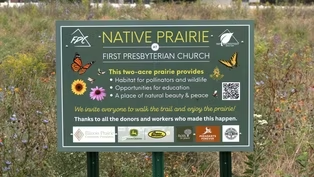
From Church Lawn to Living Prairie
Video has Closed Captions
Clip: S3 Ep4 | 5m | A Normal church transforms vacant land into a native prairie teeming with life. (5m)
 New
Preview: Restoring Nature, Rethinking Waste
Preview: S3 Ep4 | 30s | Preview: Restoring Nature, Rethinking Waste (30s)
 New
Protecting the Mackinaw River’s Natural Treasures
Video has Closed Captions
Clip: S3 Ep4 | 6m 3s | ParkLands Foundation protects native habitats and connects people with nature. (6m 3s)
Providing Support for PBS.org
Learn Moreabout PBS online sponsorship New Episode
- Science and Nature

Explore scientific discoveries on television's most acclaimed science documentary series.
 New Episode
- Science and Nature

Capturing the splendor of the natural world, from the African plains to the Antarctic ice.





 New Episode

Support for PBS provided by:
WTVP EcoWatch is a local public television program presented by WTVP
Support for Ecowatch is provided by the Backlund Charitable Trust