WTVP EcoWatch
Protecting the Mackinaw River’s Natural Treasures
Clip: Season 3 Episode 4 | 6m 3sVideo has Closed Captions
ParkLands Foundation protects native habitats and connects people with nature.
Explore Merwin Preserve with ParkLands Foundation Executive Director Craig Lutes and meet volunteers helping protect the Mackinaw River watershed. Discover how habitat restoration, invasive species removal and a commitment spanning generations preserve natural spaces for wildlife and people in Central Illinois.
Problems playing video? | Closed Captioning Feedback
Problems playing video? | Closed Captioning Feedback
WTVP EcoWatch is a local public television program presented by WTVP
Support for Ecowatch is provided by the Backlund Charitable Trust
WTVP EcoWatch
Protecting the Mackinaw River’s Natural Treasures
Clip: Season 3 Episode 4 | 6m 3sVideo has Closed Captions
Explore Merwin Preserve with ParkLands Foundation Executive Director Craig Lutes and meet volunteers helping protect the Mackinaw River watershed. Discover how habitat restoration, invasive species removal and a commitment spanning generations preserve natural spaces for wildlife and people in Central Illinois.
Problems playing video? | Closed Captioning Feedback
Where to Watch WTVP EcoWatch
WTVP EcoWatch is available to stream on pbs.org and the PBS app.
Providing Support for PBS.org
Learn Moreabout PBS online sponsorshipCraig Lutes took us on a tour of the Merwin Preserve in McLean County and talked about the importance of restoration, protection and education.
- It's one of my favorite phrases that I hear is people, especially those who've grown up in Bloomington-Normal their whole life, and they'll come to a place like this or even some of our more remote preserves and say, "I had no idea this was here, you know.
I grow up my whole life here and I had no idea places like this existed."
So we're lucky to be able to take people out and experience that.
The mission of the ParkLands Foundation is to protect and restore and manage the Mackinaw River Basin.
So the Mackinaw River runs for about 130 miles near the town of Sibley to the east, to near Pekin and the west.
But the ParkLands Foundation is really focused on what's called the upper Mackinaw River Valley, which includes the areas that run through northern McLean County and then spills over into the eastern portion of Woodford County.
And one of the things the Mackinaw River Basin is known for is its diversity of wildlife, birds and mammals and amphibians, but then also the river itself also introduces a really unique diversity.
So the Mackinaw River is recognized as one of the most diverse waterways in the state, the healthiest waterways in the state, and a lot of that is due to the diversity of fish species and mussel species and the macro invertebrates.
So this really is the start of savanna.
So savanna, native habitat classified by its larger trees, widely spaced, relatively open canopy with a diverse grassland sub story.
And this would be what is registered with the state of the nature preserve and highly protected.
Loring Merwin was the editor of "The Pantagraph" newspaper and the founder of ParkLands, and so it was really his vision and his influence in the community that made ParkLands happen.
Davis was his nephew and also eventual editor of "The Pantagraph," but without their vision for building what ParkLands has become, none of this would be here for sure.
So there was talks at the time and there was success around central Illinois for things like county parks or park districts.
And specific to this area near Bloomington-Normal, there was not an interest to have a park, you know, a county park or a state park.
And so the original vision, going back to Loring Merwin, the founder, was, "Well, if it's not going to be protected through a park structure, let's do it ourselves.
We'll raise the money and we'll buy the land and we'll let people go."
And that's been the energy behind ParkLands since the beginning.
Now it's over time, ParkLands' focus has changed from, we've realized as the scientific understanding of our native habitats, the cultural understanding of our native habitats, it's not good enough to just own it and let it sit there, right?
It takes very active management as our understanding of prescribed fire controlling invasive species has changed over time.
And so, you know, ParkLands has really grown from not only a place where people can go outside and appreciate being in nature and land that is set aside or protected, but land that is actively managed as well.
One of our biggest challenges in maintaining native habitats in central Illinois is invasive species.
So our native habitats are a very diverse mix of plants, in particular.
And many times invasive species such as bush honeysuckle, such as autumn olive and others, they'll take over a certain area and a certain habitat and it'll reduce that biodiversity.
So one of the things our volunteers work very hard on and get their hands dirty and their faces torn going through briar patches at times is working to control those invasive species.
- When I taught at Illinois Wesleyan, I would bring my conservation biology students out and we would battle invasive species.
- [Mark] So what do you personally get out of this when you're out here volunteering?
- Satisfaction.
So we are so fortunate to have this because over 80% of McLean and Woodford counties are intensive row crop agriculture.
This is literally an oasis and to protect it for birds, for wildlife, for people, it's just amazing.
I hope that ParkLands continues to grow, continues to buy and protect these vital natural areas.
I mean, the goal is to really have contiguous habitat along the Mackinaw River.
So the isolated tracks are important, but if they're connected, this allows animals to move from one location to another.
And if you're going to maintain populations and genetic diversity, that's necessary.
- [Mark] You brought the kids out here when they were younger.
How do you think that benefited the kids and how did it benefit you as a whole family?
- Well, at the time, they enjoyed it and stuff, but we really think that because we did that when they were younger, they're now taking their kids out and getting them used to being out in nature.
So that to me is the paying it forward.
- You never know the next year... What we enjoy, one is the camaraderie of the fellow volunteers and the older stewards, they're showing of knowledge, their willingness to give of themselves.
It has been very rewarding for us.
I've learned more.
They've probably forgotten more than we'll ever learn from them, but it's been so helpful.
- If you love nature, this is your way to help it out and you can take care of those invasives so that they don't encroach upon everything else that is there.
And it's going to be a sense of reward for yourself that you've come out and done something that is meaningful.
 New
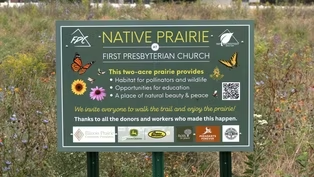
From Church Lawn to Living Prairie
Video has Closed Captions
Clip: S3 Ep4 | 5m | A Normal church transforms vacant land into a native prairie teeming with life. (5m)
 New
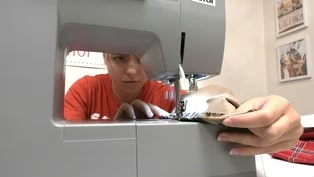
Giving Clothes a Second Life at Illinois State
Video has Closed Captions
Clip: S3 Ep4 | 3m 1s | ISU’s Share Shop and Fix It Friday keep clothing in use and out of landfills. (3m 1s)
 New
Preview: Restoring Nature, Rethinking Waste
Preview: S3 Ep4 | 30s | Preview: Restoring Nature, Rethinking Waste (30s)
Providing Support for PBS.org
Learn Moreabout PBS online sponsorship New Episode
- Science and Nature

Explore scientific discoveries on television's most acclaimed science documentary series.
 New Episode
- Science and Nature

Capturing the splendor of the natural world, from the African plains to the Antarctic ice.




 New Episode

Support for PBS provided by:
WTVP EcoWatch is a local public television program presented by WTVP
Support for Ecowatch is provided by the Backlund Charitable Trust