WTVP EcoWatch
Restoring Nature, Rethinking Waste
Season 3 Episode 4 | 26m 46sVideo has Closed Captions
Explore local habitat restoration, native prairies and efforts to reduce clothing waste.
Mark Welp explores how the ParkLands Foundation protects the Mackinaw River watershed, visits a church turning lawn into native prairie and sees how Illinois State University gives clothing a second life. Plus, updates on data centers, rooftop solar, disposable vape waste and pumpkin composting.
Problems playing video? | Closed Captioning Feedback
Problems playing video? | Closed Captioning Feedback
WTVP EcoWatch is a local public television program presented by WTVP
Support for Ecowatch is provided by the Backlund Charitable Trust
WTVP EcoWatch
Restoring Nature, Rethinking Waste
Season 3 Episode 4 | 26m 46sVideo has Closed Captions
Mark Welp explores how the ParkLands Foundation protects the Mackinaw River watershed, visits a church turning lawn into native prairie and sees how Illinois State University gives clothing a second life. Plus, updates on data centers, rooftop solar, disposable vape waste and pumpkin composting.
Problems playing video? | Closed Captioning Feedback
Where to Watch WTVP EcoWatch
WTVP EcoWatch is available to stream on pbs.org and the PBS app.
Providing Support for PBS.org
Learn Moreabout PBS online sponsorship- [Announcer] This program is made possible in part by the Backlund Charitable Trust, established to educate and create awareness of environmental issues.
(bright music) (bright music continues) - Welcome to our latest edition of EcoWatch on WTVP.
I'm Mark Welp.
This program is dedicated to bringing you the latest environmental stories impacting our area and the state of Illinois.
We'll introduce you to people finding unique ways to make the land of Lincoln a better place for mankind and animals by protecting plants, water, soil, and crops.
Let's get started.
This episode, we profile a growing nonprofit that's protecting and restoring lands along the Mackinaw River.
Illinois State University students show us how they're helping classmates and recycling at the same time.
Plus, we take you to a church that has converted empty land into a flourishing native prairie.
But first, a growing number of Illinois communities are pausing new data center development.
These facilities house computer systems that power technology such as AI.
Environmental concerns include energy and water use, habitat disruption, air, noise, and light pollution.
Here are the latest moratoriums and regulations since our August episode.
Tezewell County's Land Use Committee and Zoning Board of Appeals recommended a nine-month moratorium.
As of this recording, the county board has not voted on it.
The town of Normal has extended its moratorium through May 31st, 2027.
City of Bloomington officials have proposed regulations and will get public feedback before the planning commission makes a recommendation to the city council.
Bloomington's current moratorium will expire at the end of this month, but the city council could extend it.
Galesburg has a moratorium that runs to the beginning of April.
The Fulton County Board extended its six-month moratorium in September for another six months.
In August, Woodford County put a six-month moratorium in place, and Logan and Livingston counties are reviewing potential regulations.
A lot of municipalities are enacting moratoriums waiting to see if state lawmakers pass the Power Act, a bill that would regulate data centers.
It requires data center companies to pay for their own energy generation and for the energy to come from renewable sources.
Data center projects would track and report how much water they use and submit water management plans to the Illinois Water Survey.
And another provision would require more transparency about data center development and for data center developers to sign community benefits agreements in the places they're constructed.
The legislation failed to move out of the House and Senate committees in the spring.
Governor Pritzker says he wants lawmakers to pass the bill during the fall veto session, which begins November 17th.
I recently moderated a 16th congressional district candidate forum between Darin LaHood and Paul Nolley.
Here's what they have to say about data centers.
- We have to pass federal legislation.
The federal government must do this to make sure that our energy costs are not going up.
They need to bring their own energy generation.
We need to make sure that we are not giving them a single dime in federal taxpayer dollars.
We also need to make sure that when there's water use, when there's water discharge, when there are, you know, any things that's going on like that, the people in those areas have to know.
There has to be transparency and local communities need to be in charge of what facilities are built in their area.
- Any decision that gets made at a local level needs to be made by local officials.
That could be a village board, that could be a city council, that could be a county board.
It should not be made by elected officials at the state level or the federal level.
Full transparency needs to be laid out for any data center that would go into a local community.
We need to have information on the water use, the electricity use, the noise that comes from there.
Has to be done at the local level and there needs to be full transparency.
- When it comes to installing solar panels and building solar farms, many people ask, "Why can't you just put them on buildings instead of using open fields or farmlands?"
One of the short answers is small buildings can't handle enough solar panels for large scale energy needs, but rooftop solar projects can produce clean energy for some homes and businesses.
Recently, ComEd, Illinois' largest electricity provider, announced a partnership with Public Storage to develop 60 community solar projects on storage facility rooftops.
Once completed, the projects are expected to generate enough electricity each year to power approximately 6,150 households while delivering an estimated $750,000 in annual electricity bill savings for subscribers.
The average residential subscriber is expected to save approximately $120 annually on electricity costs.
Construction is expected to support approximately 300 jobs and expand career opportunities.
The Illinois Youth Build Coalition trains and educates low income young people in construction industry skills, skills that will be needed as Illinois works towards 100% clean carbon-free power.
- For our participants, that means a chance to prepare for the thousands of clean energy jobs expected across Illinois in the years ahead.
It means pathways to family sustaining careers and the opportunity to be a part of building the state's energy future.
- ComEd anticipates completing more than 400 community solar installations by the end of this year.
For nearly 60 years, the nonprofit ParkLands Foundation has been protecting and restoring land in the Mackinaw River Watershed.
The 3,600 acres of habitat in McLean, Woodford and Tazewell counties includes prairies, savannas, forest and river habitat in 19 different preserves.
Recently, the growing organization hired its first ever executive director.
Craig Lutes took us on a tour of the Merwin Preserve in McLean County and talked about the importance of restoration, protection and education.
- It's one of my favorite phrases that I hear is people, especially those who've grown up in Bloomington-Normal their whole life, and they'll come to a place like this or even some of our more remote preserves and say, "I had no idea this was here, you know.
I grow up my whole life here and I had no idea places like this existed."
So we're lucky to be able to take people out and experience that.
The mission of the ParkLands Foundation is to protect and restore and manage the Mackinaw River Basin.
So the Mackinaw River runs for about 130 miles near the town of Sibley to the east, to near Pekin and the west.
But the ParkLands Foundation is really focused on what's called the upper Mackinaw River Valley, which includes the areas that run through northern McLean County and then spills over into the eastern portion of Woodford County.
And one of the things the Mackinaw River Basin is known for is its diversity of wildlife, birds and mammals and amphibians, but then also the river itself also introduces a really unique diversity.
So the Mackinaw River is recognized as one of the most diverse waterways in the state, the healthiest waterways in the state, and a lot of that is due to the diversity of fish species and mussel species and the macro invertebrates.
So this really is the start of savanna.
So savanna, native habitat classified by its larger trees, widely spaced, relatively open canopy with a diverse grassland sub story.
And this would be what is registered with the state of the nature preserve and highly protected.
Loring Merwin was the editor of "The Pantagraph" newspaper and the founder of ParkLands, and so it was really his vision and his influence in the community that made ParkLands happen.
Davis was his nephew and also eventual editor of "The Pantagraph," but without their vision for building what ParkLands has become, none of this would be here for sure.
So there was talks at the time and there was success around central Illinois for things like county parks or park districts.
And specific to this area near Bloomington-Normal, there was not an interest to have a park, you know, a county park or a state park.
And so the original vision, going back to Loring Merwin, the founder, was, "Well, if it's not going to be protected through a park structure, let's do it ourselves.
We'll raise the money and we'll buy the land and we'll let people go."
And that's been the energy behind ParkLands since the beginning.
Now it's over time, ParkLands' focus has changed from, we've realized as the scientific understanding of our native habitats, the cultural understanding of our native habitats, it's not good enough to just own it and let it sit there, right?
It takes very active management as our understanding of prescribed fire controlling invasive species has changed over time.
And so, you know, ParkLands has really grown from not only a place where people can go outside and appreciate being in nature and land that is set aside or protected, but land that is actively managed as well.
One of our biggest challenges in maintaining native habitats in central Illinois is invasive species.
So our native habitats are a very diverse mix of plants, in particular.
And many times invasive species such as bush honeysuckle, such as autumn olive and others, they'll take over a certain area and a certain habitat and it'll reduce that biodiversity.
So one of the things our volunteers work very hard on and get their hands dirty and their faces torn going through briar patches at times is working to control those invasive species.
- When I taught at Illinois Wesleyan, I would bring my conservation biology students out and we would battle invasive species.
- [Mark] So what do you personally get out of this when you're out here volunteering?
- Satisfaction.
So we are so fortunate to have this because over 80% of McLean and Woodford counties are intensive row crop agriculture.
This is literally an oasis and to protect it for birds, for wildlife, for people, it's just amazing.
I hope that ParkLands continues to grow, continues to buy and protect these vital natural areas.
I mean, the goal is to really have contiguous habitat along the Mackinaw River.
So the isolated tracks are important, but if they're connected, this allows animals to move from one location to another.
And if you're going to maintain populations and genetic diversity, that's necessary.
- [Mark] You brought the kids out here when they were younger.
How do you think that benefited the kids and how did it benefit you as a whole family?
- Well, at the time, they enjoyed it and stuff, but we really think that because we did that when they were younger, they're now taking their kids out and getting them used to being out in nature.
So that to me is the paying it forward.
- You never know the next year... What we enjoy, one is the camaraderie of the fellow volunteers and the older stewards, they're showing of knowledge, their willingness to give of themselves.
It has been very rewarding for us.
I've learned more.
They've probably forgotten more than we'll ever learn from them, but it's been so helpful.
- If you love nature, this is your way to help it out and you can take care of those invasives so that they don't encroach upon everything else that is there.
And it's going to be a sense of reward for yourself that you've come out and done something that is meaningful.
- If you'd like to learn more about the ParkLands Foundation and visit one of their preserves, there's a hike on Sunday, November 8th in Woodford County.
Naturalists will point out interesting plants and wildlife.
You can go to parklandsfoundation.org for more information and to register.
And the ParkLands Foundation recently secured nearly $100,000 in funding from the Illinois Department of Natural Resources.
The funds will be used for equipment and support for invasive species removal, prescribed burns, and increasing stewardship capacity at four preserves, including Merwin.
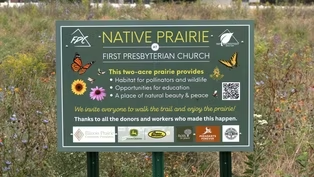
(screen whooshing) Two years ago, we visited First Presbyterian Church in Normal to show you how a simple landscaping project turned into a certified wildlife habitat.
The native plants attract pollinators like bees, butterflies, moths, and birds.
Well, this year, First Presbyterian's Green Team has expanded its work to transform two plus acres of vacant land, north of the church, into a native prairie.
- Well, we've had this church property for 30 some years.
It was a large property and it was a lot of mowing involved and it was all volunteers from the church that come out during the summer and fall and spring and mow, and it takes a lot of time.
You want things to look nice, but there was also a desire for doing something different.
And so our Green Team group got together and we started talking about this idea of a prairie.
We though it was a great idea, something a little more biodiverse than just turf grass.
And so we've been cooking this idea for a while and it turns out that the Baptist church, First Baptist across the street, put in a prairie and we said, "Oh, hey, this is great."
And so we had some conversations with them, got a chance to tour theirs and find out what they did, and that was further inspiration for us.
- [Mark] What is it like taking care of a prairie as opposed to taking care of grass?
- Well, it's a lot less mowing.
Our property folks and the folks who mow already said that it knocked two hours off the mowing time just with a little more than two acres put into prairie.
And so that's been great.
It's a lot less gas, it's a lot less labor.
And we were very intentional with this project to secure some grant funding and other things.
And one of the big selling points that we were making to our property committee and our church governing body was that we're not coming and asking for a line item in the budget and we can do this without it being an expense to the church.
And so it is saving money on mowing, gas, things like that.
There was some upfront expense to just get it installed and then it's a commitment in time.
We've spent time out here pulling out ragweed, pulling out horseweed, you know.
We're never going to get everything but trying to keep ahead of things just so it doesn't get established and start to crowd out what we want growing in there.
So it does take some commitment to spend some time out there, especially in the summer when it's hot and it might not be real comfortable, so you just come out early in the morning.
(birds chirping) - [Mark] How have you seen the landscaping around this church change in the last 30 years?
- The landscaping is one of the strengths, I think, of the church, and there's a lot of dedicated people who spend a lot of time taking care of the landscaping.
There's a lot of flowers and plants and different trees, and it's quite a point of pride for the folks that are working on it.
And we just wanted to see if we could expand that a little bit and carry it a little bit further on out into the prairie.
I have been amazed at how quickly the prairie developed.
The prairie just existed in our minds (chuckles) as a proposal as how we thought it was going to be a year ago.
And then in the fall, it was just dirt.
And as late as the middle of May of last year, there was no plant life to speak of.
And then the season changed, it got warmer, the rains came and the prairie just exploded into this profusion of blossoms, and that was a wonderful surprise.
The thing that strikes me virtually every time I walk through the prairie is the amount of life that has come to be in the prairie area.
Before we had the prairie, it was like this grass and it was essentially sterile, not much going on there in terms of life.
But now there's butterflies everywhere.
There's bees and other pollinators.
There are dragonflies, there's birds, there's rabbits.
There's a lot going on.
And the diversity of the planting, the fact that there's about a hundred different species of plants growing there, I think helps promote that.
- This is church property.
- Mm-hmm.
- [Mark] How do you think as a parishioner that God comes into all of this?
- I think that we are instructed to be good stewards of the land where we live.
It feels right.
It seems just inherently right to have a prairie as opposed to a grass field which might be sprayed and mowed and not as ecologically sound.
- First Presbyterian Church's Prairie is open to the public, and if you'd like to check it out in person, feel free.
Well, health officials have been warning us about the risks of vaping since the popularity of e-cigarettes exploded a decade ago.
Now researchers at the University of Illinois are studying how the environment is affected when disposable vapes are tossed away.
U of I researchers in collaboration with the University of Plymouth in the UK focused on used disposable vape devices.
Here in Illinois, researcher John Scott's team collected used vapes from a Chicago area vape shop's waste stream.
They disassembled common models, extracted the liquid, and analyzed it to confirm the metal content.
The analysis from the US team revealed that the vape liquid contained extremely high levels of lead among the highest ever reported in an e-cigarette product.
John Scott said, quote, "There was one brand, in particular, that stuck out.
It was almost always a problem, not only containing lead, but also zinc and copper at extremely high levels.
As it turns out, that brand is also the cheapest.
So now there's an environmental justice angle because people who can't afford the more high-end vapes have a higher potential to be exposed to these heavy metals," end quote.
Beyond potential health effects, the researchers stress that disposable vapes are creating a serious solid waste problem.
In the US, nearly 500,000 disposable vapes are thrown away every day.
They contain batteries, circuitry, plastics, and metal containing liquids in a compact package that's hard to disassemble and recycle.
When disposable vapes are thrown away in the regular trash, the contaminated liquid could leach heavy metals like lead, copper, zinc, and nickel into a landfill, increasing the risk of groundwater contamination.
The batteries of the vapes also present a fire hazard.
(screen whooshing) When it comes to pollution, industries like energy, transportation, and manufacturing account for much of the carbon emissions and water pollution worldwide.
One sector near the top of the pollution list may surprise you.
It's the fashion and textile industry.
A big pollution culprit is fast fashion, that refers to the rapid design and production of low cost clothing.
According to "Business Insider," fashion production is responsible for 10% of global carbon emissions, and textile dying is the world's second largest polluter of water.
Cheap clothing leads to more production and waste.
Around the world, 92 million tons of textiles are thrown away and most of the waste ends up in landfills every year.
Much of the waste contains synthetic fibers, which release toxic chemicals, but there is hope in the fight against waste and pollution.
85% of textiles that are thrown away can be reused or repurposed.
Locally, the Illinois State University Office of Sustainability is doing its part in keeping clothes out of landfills and on the backs of students who need them, and it's done by sharing and fixing.
- The Share Shop is ISU's free secondhand store.
It started several years ago with a group of students from student government who were interested in putting together kind of a career closet of some professional clothing that students could use for interviews and that type of thing.
And they were looking for a space to be able to do that.
I have a background in fashion design and merchandising as well, so when they approached me, they approached the right person (chuckles) as far as I've always wanted to do something like this, and so we kind of put our heads together and opened the Share Shop.
We get donations from students certainly, but we also get a lot of donations from the community as well.
So all across Bloomington-Normal, alumni will send us donations.
We'll get donations of Redbird clothing, which is always fun, or even graduation gowns.
So the response has actually been a little overwhelming at times with how many donations that we get, and it is a small space, so, (chuckles) you know, but sometimes can get pretty crowded in here, but it's very exciting.
The fashion industry is one of the world's biggest polluters, whether it be the environmental impact of the textiles themselves, of how they're produced, polyester is made from petroleum, so, you know, our reliance on fossil fuel, that being one of them, when we wash things with polyester, especially things like fleece, those, when we wash them, you know, they'll shed those microplastics and it becomes a real problem for us.
So the choices, as far as textiles, is important, thinking more about some of those natural fibers and trying to stay away from any of the synthetics that are made from petroleum.
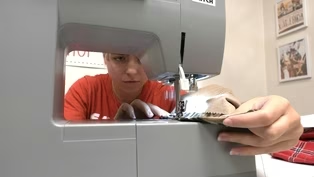
(sewing machine rasping) - Fix it Friday is a repair shop that we have open every Friday in the office.
People from the community and ISU students, basically anyone is welcome to bring in clothing items or other items.
Sometimes we get shoes, beanbag chairs that have, like, holes in them or tears, need a button replaced.
Simple fixes, we do hem sometimes.
They can bring it in here and then we'll fix it for them.
It's a same day service, so we try to be as quick as we can with our fixes while also providing quality stitches to where it will last them a long time.
We kind of now see fashion as more something that's disposable, even though a lot of clothing is made of, like synthetic plastic fibers.
And so when we think of fashion as disposable, a lot of it ends up in the landfill and it will sit there for a really long time.
Even food can take like 20 years to fully decompose in the landfill, so plastic will take, like, way, way more than that.
So it's really harmful to the planet and has a much bigger impact than I think we generally think about.
This is a great way to get involved, learn about the environment, and then help people out too.
- Just to reiterate, anyone can donate to the Share Shop, but only ISU students can shop there.
But anyone could take advantage of Fix It Friday.
To learn more about these sustainability programs and others, go to sustainability.illinoisstate.ed.
(screen whooshing) Well, now that Halloween is over, you may want to get rid of your pumpkins soon, and you're encouraged to recycle them so they don't end up in landfills.
You might be thinking it's just a vegetable, but more than one billion pounds of pumpkins Americans throw away every year produce methane, which is a potent greenhouse gas.
Ideally, pumpkins should be composted or buried deep in garden beds.
The nitrogen-rich vegetable breaks down quickly and adds moisture and nutrients to your soil.
If you don't have your own compost pile, there are recycling events around the state.
In our area, the University of Illinois Extension, town of Normal, and the Illinois State University Department of Agriculture are partnering with Rader Family Farms to compost your pumpkins.
Pumpkins can be dropped off in either dumpster at the south end of the Rader Family Farms parking lot from Monday, November 2nd through Thursday, November 5th at no charge.
Pumpkins should be free of candles, stickers, glitter, metal, or anything synthetic and non-compostable.
Pumpkins covered in water-based paints are acceptable.
(screen whooshing) (gentle music) Thanks for joining us for EcoWatch.
If you'd like to watch again, share with a friend, or watch past episodes, just look for us at wtvp.org.
I'm Mark Welp.
See you again soon.
(gentle music continues) (gentle music continues) - [Announcer] This program is made possible in part by the Backlund Charitable Trust, established to educate and create awareness of environmental issues.
(gentle music) (no audio)
 New
From Church Lawn to Living Prairie
Video has Closed Captions
Clip: S3 Ep4 | 5m | A Normal church transforms vacant land into a native prairie teeming with life. (5m)
 New
Giving Clothes a Second Life at Illinois State
Video has Closed Captions
Clip: S3 Ep4 | 3m 1s | ISU’s Share Shop and Fix It Friday keep clothing in use and out of landfills. (3m 1s)
 New
Preview: Restoring Nature, Rethinking Waste
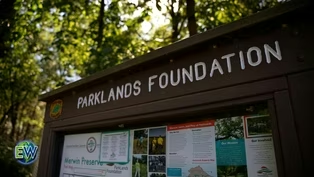
Preview: S3 Ep4 | 30s | Preview: Restoring Nature, Rethinking Waste (30s)
 New
Protecting the Mackinaw River’s Natural Treasures
Video has Closed Captions
Clip: S3 Ep4 | 6m 3s | ParkLands Foundation protects native habitats and connects people with nature. (6m 3s)
Providing Support for PBS.org
Learn Moreabout PBS online sponsorship New Episode
- Science and Nature

Explore scientific discoveries on television's most acclaimed science documentary series.
 New Episode
- Science and Nature

Capturing the splendor of the natural world, from the African plains to the Antarctic ice.



 New Episode

Support for PBS provided by:
WTVP EcoWatch is a local public television program presented by WTVP
Support for Ecowatch is provided by the Backlund Charitable Trust